As Dan River management built the community of Schoolfield, they could not forgo to provide space for a critical aspect of life: death. Bearing the end we all meet in mind, Dan River management established the Schoolfield Cemetery in the southern border of the village just beyond the residential streets in Schoolfield’s southern belly. Thus from “the cradle to the grave,” Dan River shaped the arch of their millhands’ lives in Schoolfield.
The Schoolfield Cemetery is approximately 15.92-acre and is characterized by its regular rows of modest gravestones that range from professionally carved and highly decorative to simple hand-engraved vernacular. According to local records, there are over 3,000 graves in this cemetery. Though local records document this cemetery as starting in 1922, the oldest gravestone found marks the death of an infant – common in this cemetery and noted often with a sculptural lamb on headstones—of Sarah Elizabeth Freeman in 1910. The earliest internments are grouped mainly in the southern portion of the cemetery, with more recent graves, such as Gladys and George Jordon’s 2007 graves, grouped in the northern portion, with the exception of some graves grouped by family throughout the site. The southern portion below Schoolfield Drive is sparsely peppered with headstones, with the northern portion above Schoolfield Drive and Fairfield Avenue bearing greater density. Nearly all these graves are those of Dan River industrial employees or Schoolfield residents. Executives and clerical employees of Dan River Mills, such as Rose Brimmer, an early superintendent of village schools, or Harry Fitzgerald, Dan River Mills President from 1919 to 1931, were buried at Green Hill Cemetery in Danville rather than at this Schoolfield cemetery, which was reserved for millhands and Schoolfield residents and their families.
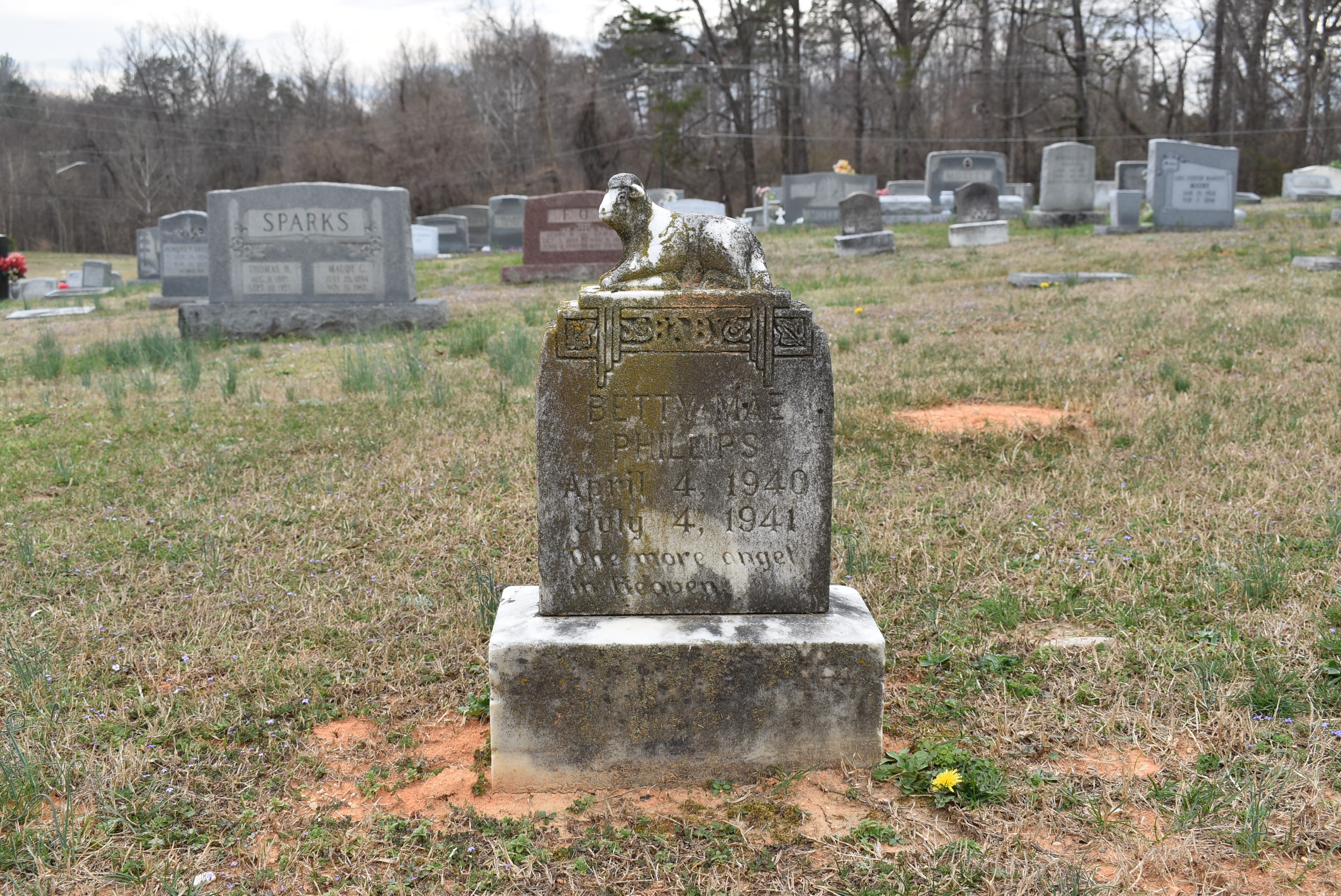
The older graves are in furthest southern region of the cemetery. This photo shows a mix of older and newer headstones. Courtesy of Ina Dixon.
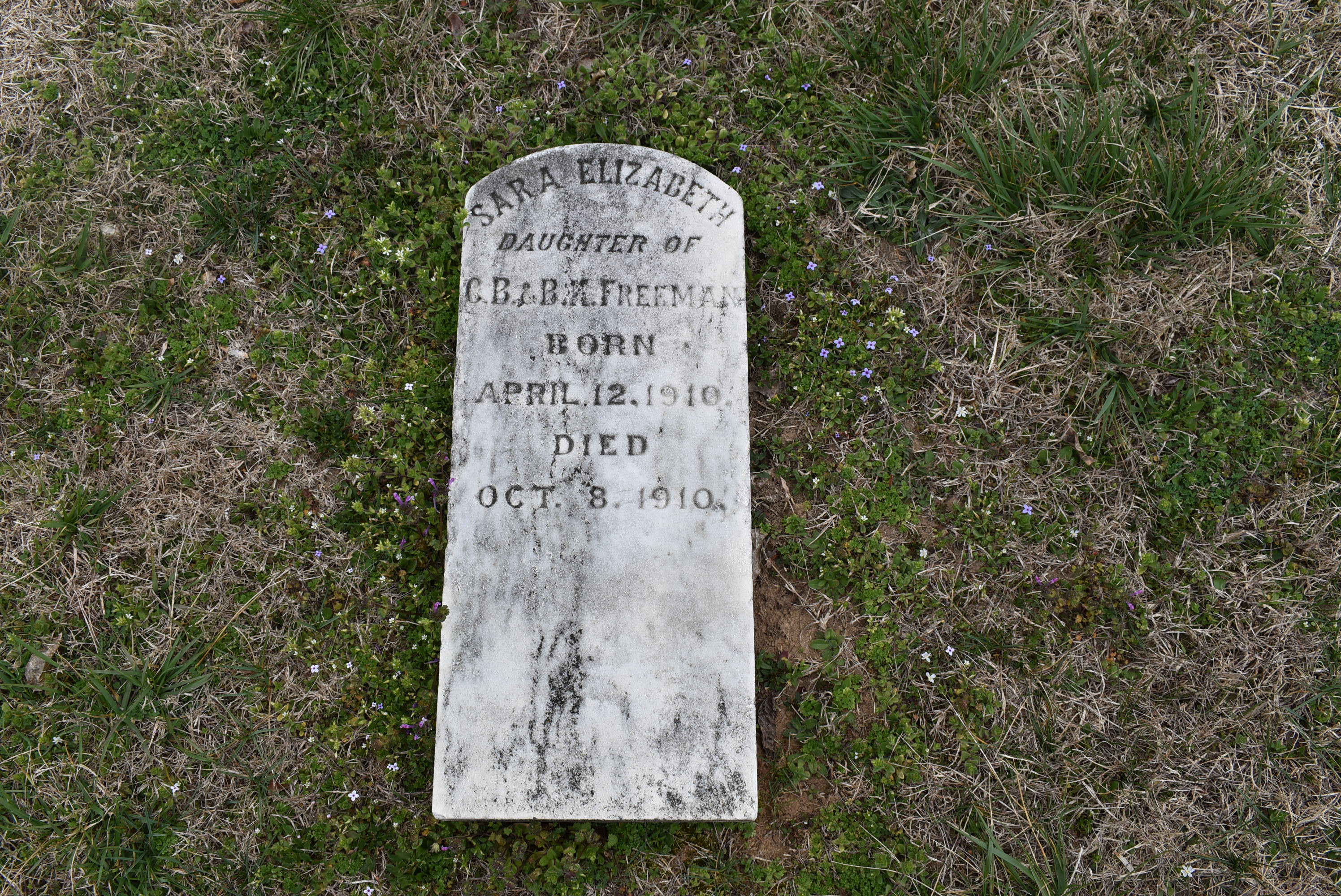
It was not uncommon for millworkers’ children to not survive infancy, as this early 1910 gravestone sadly indicates. Courtesy of Ina Dixon.

This grave is hand-carved for a child “borned” and “died” in 1930. These folks no doubt had to save money on what would otherwise have been a large expense for a small family just starting out at the mills. Courtesy of Ina Dixon.
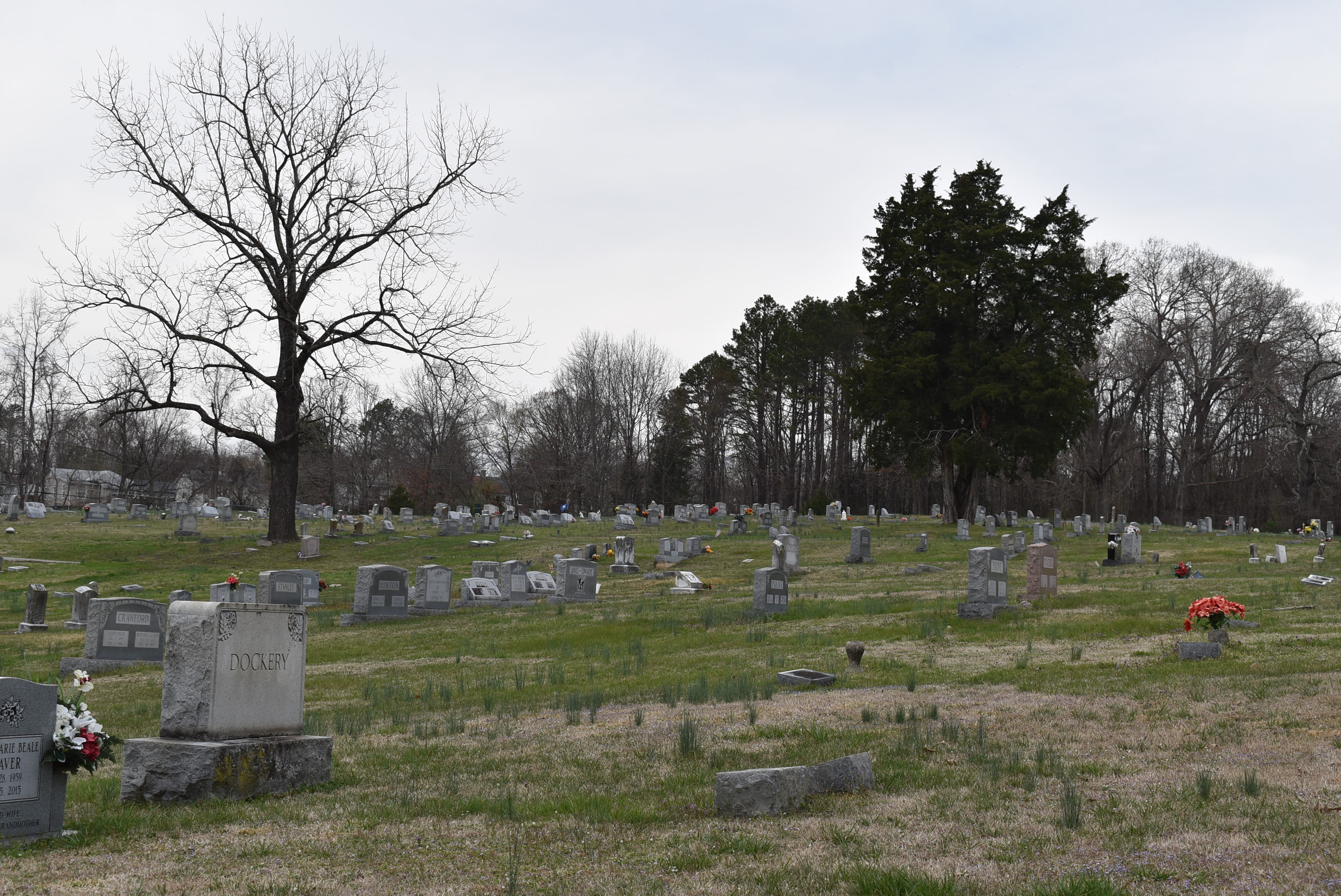
A view of Schoolfield Cemetery. Courtesy of Ina Dixon.
See also:
Hall, Jacquelyn Dowd, James Leloudis, Robert Korstad, Mary Murphy, Lu Ann Jones, and Christopher Daley. Like a Family: The Making of a Southern Cotton Mill World. 2000 ed. The Fred W. Morrison Series in Southern Studies. Chapel Hill: University of North Carolina Press, 1987, page 139.
 schoolfieldvillage.com