This school, now a senior apartment complex, was started by Dan River, who gave the land to the Pittsylvania County School Board around 1912. (Schoolfield was then encompassed within Pittsylvania County, being a village independent from the City of Danville until 1951). The 1913 brick school, designed by the progressive architect Charles G. Pettit Jr. The 1913 school boasted a brick exterior, built in a simplified Prairie Style with an elongated entry tower and broad, multi-paned windows on each of its two stories. Embellished with sunlight by the large exterior windows, the school’s central hallways were simple in design, with original wooden floors guiding students to a total of twenty-six classrooms on the perimeter of the basement level as well as the perimeter of the first and second floors. The second floor held a large auditorium and gathering space for students, staff, and teachers, while the finished basement supplied utilities and storage for the school.
Situated close to residences in the southern belly of the village but also nearby the mill site north of the railroad, the school served a dual purpose as a center for profit-maximizing through the family labor system and through education. In its early years, Dan River relied on what was known as the family labor system, which enticed white families to work at the mills—the more members as millhands, the better. Women and their young children in textiles were notoriously underpaid in the family labor system, which paid the highest wages to primary male workers. Ethel Knick, who went to work at the mills in the 1920s when she was sixteen, recalled that boys often entered the mills as early as twelve and girls at thirteen, often underpaid in comparison to their millhand parents. “The mill needed help,” Knick explained in a 1984 interview, and “the more children, the better” for the mill’s profit margins.
In the first years of the village school system, the company only offered schooling through the seventh grade. By 1922, the company expanded its offerings through tenth grade and executives at Dan River used company funds to partially pay teachers’ salaries. Three months out of the ten-month school year were paid by the company, the other months were paid by Pittsylvania County. Company funds also went to support all of the kindergartens offered in the village, and the entire salaries of all home economics teachers. Early childhood education and home economics were vital investments for the company. Funding for these programs ensured the stability of workers’ homelife and the continued work of mothers and children. Like other school systems supported by southern textile companies, in Schoolfield, the public school provided, as historian Cathy McHugh has observed, a mechanism for screening future millhands and the training ground for “developing desirable worker skills and traits.”
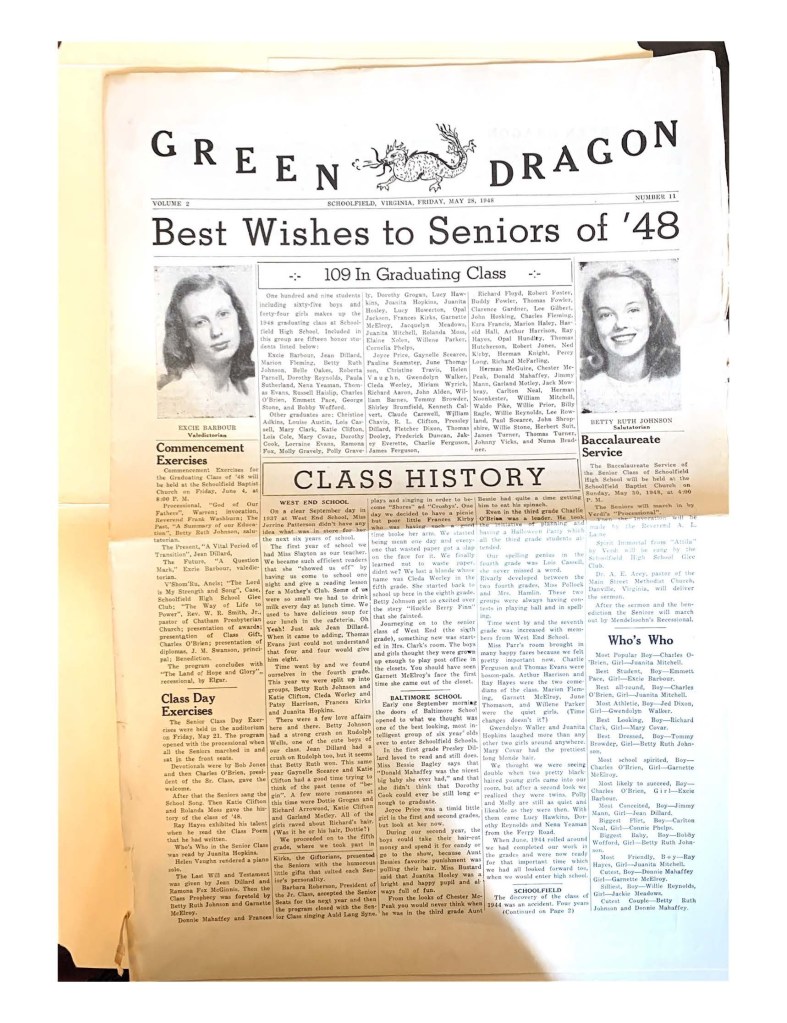
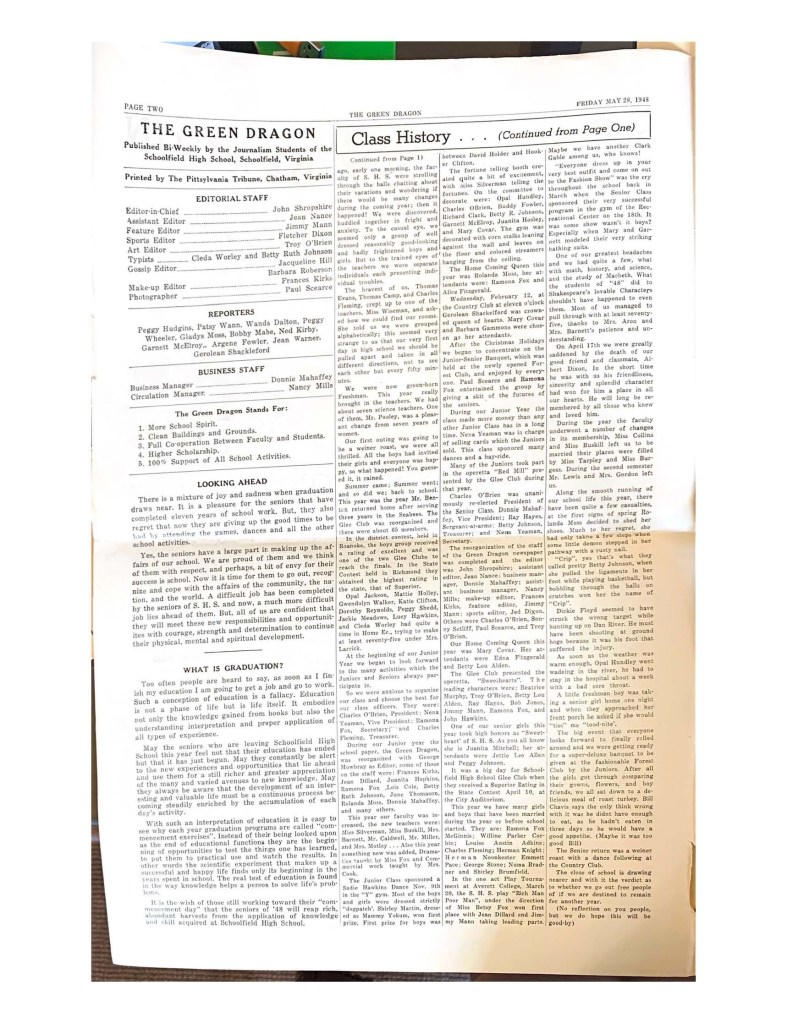
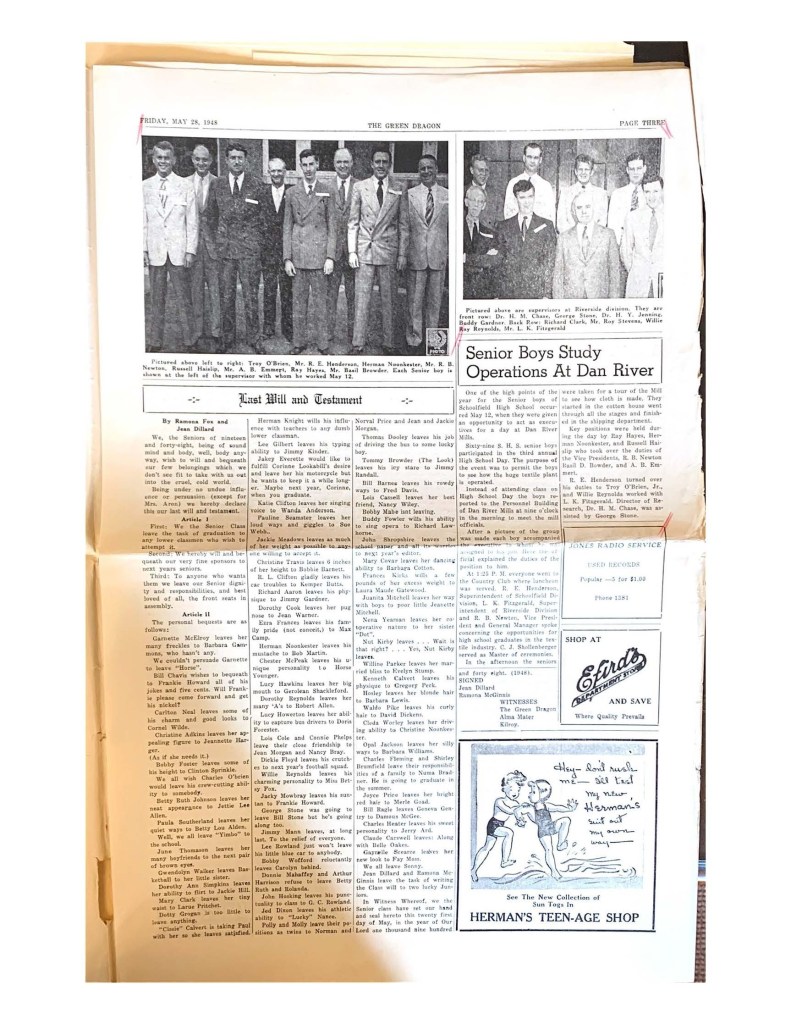
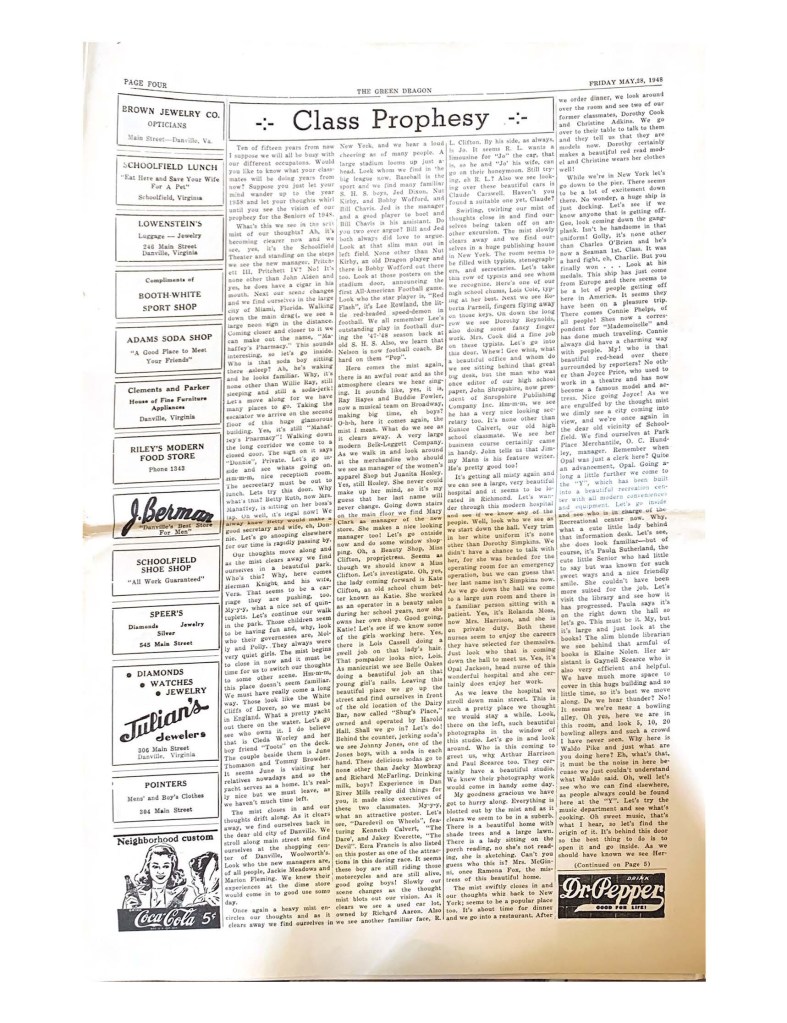
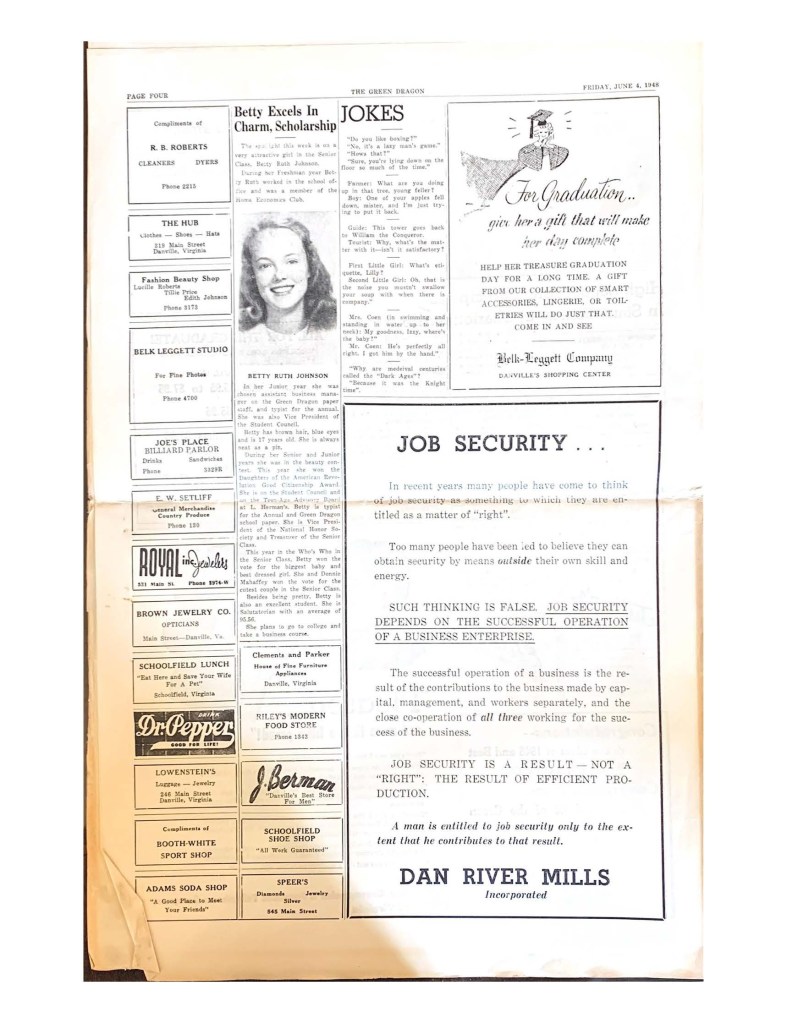
In 1936 and 1939 two additional buildings were built to accommodate the growing student body at what was then Schoolfield High School. The school mascot at this time was the “Green Dragon” and the newspaper shared the same name. Many fond memories were made at the school, which sadly closed in 1954 following the City of Danville’s annexation of Schoolfield. All students were integrated with Danville’s George Washington High School. The school was put back to use as a middle school and offices of the Danville City Public School System until the 2010s when the building was redeveloped as the Schoolfield Senior Apartments.

“Schoolfield Cotton Mills, Danville Va. Going to work; 6-30 A.M. June 9, 1911. A few young boys and girls under 14, work in these mills, but not many, and they are large mills,” by Lewis Hine. Courtesy of the Library of Congress.

A 1911 photograph “Some of the young workers in Schoolfield Cotton Mills, Danville, Va. The very young would not be photographed” by Lewis Hine. Courtesy of the Library of Congress.
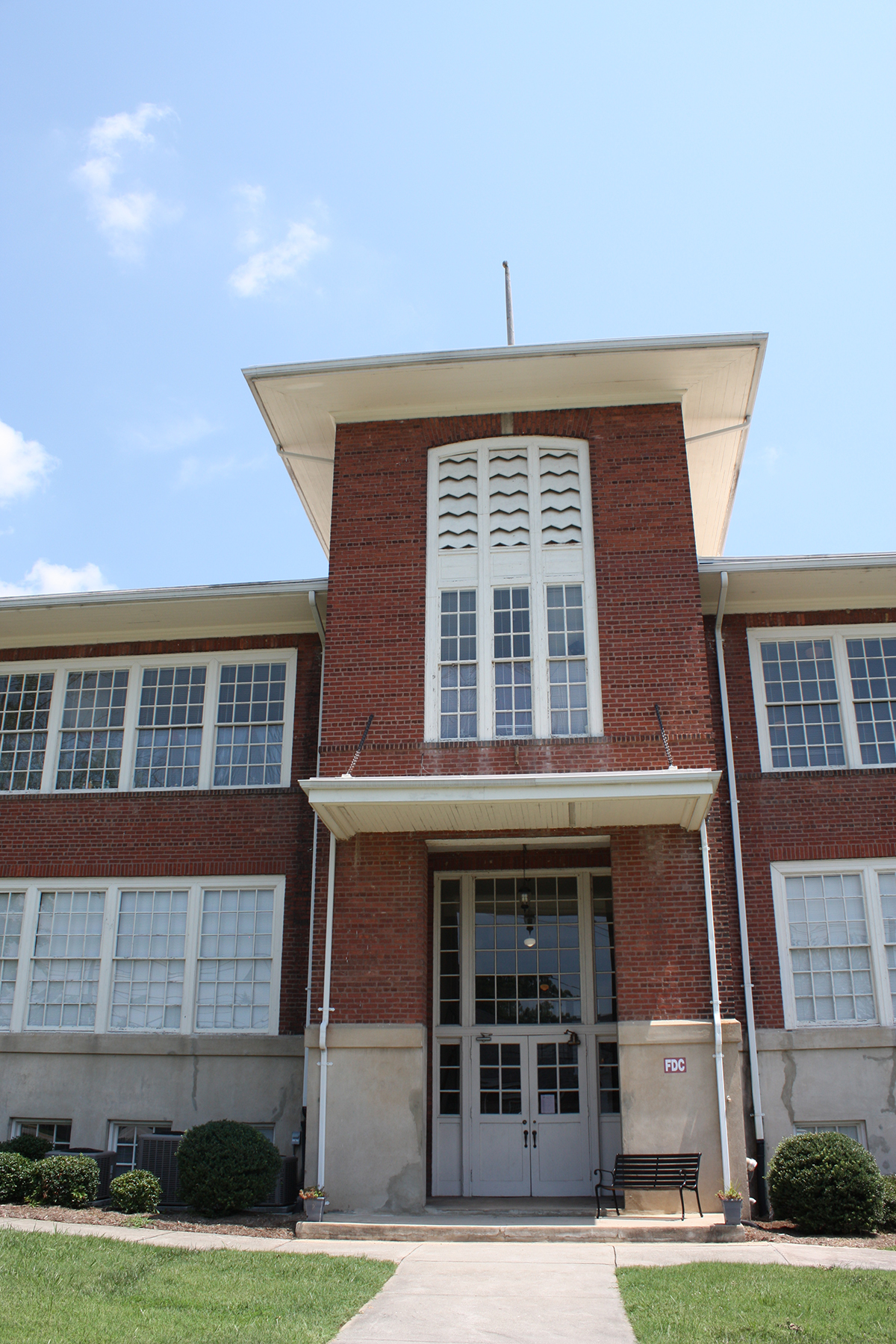
Photo of the main Schoolfield High School building entrance. 2020 Photo from the City of Danville.
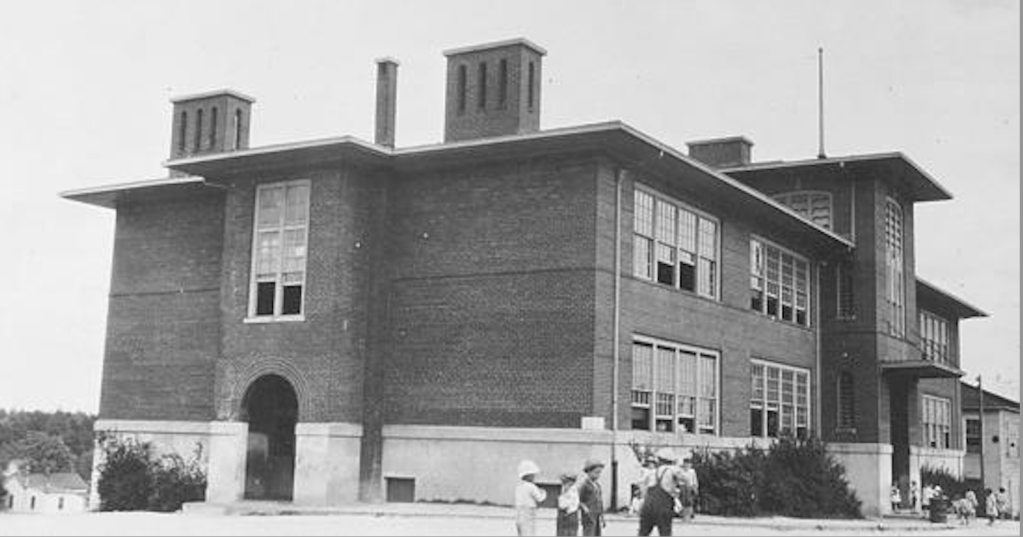
A 1933 photograph of Schoolfield School at 31 Baltimore Avenue. Courtesy of the Library of Virginia.
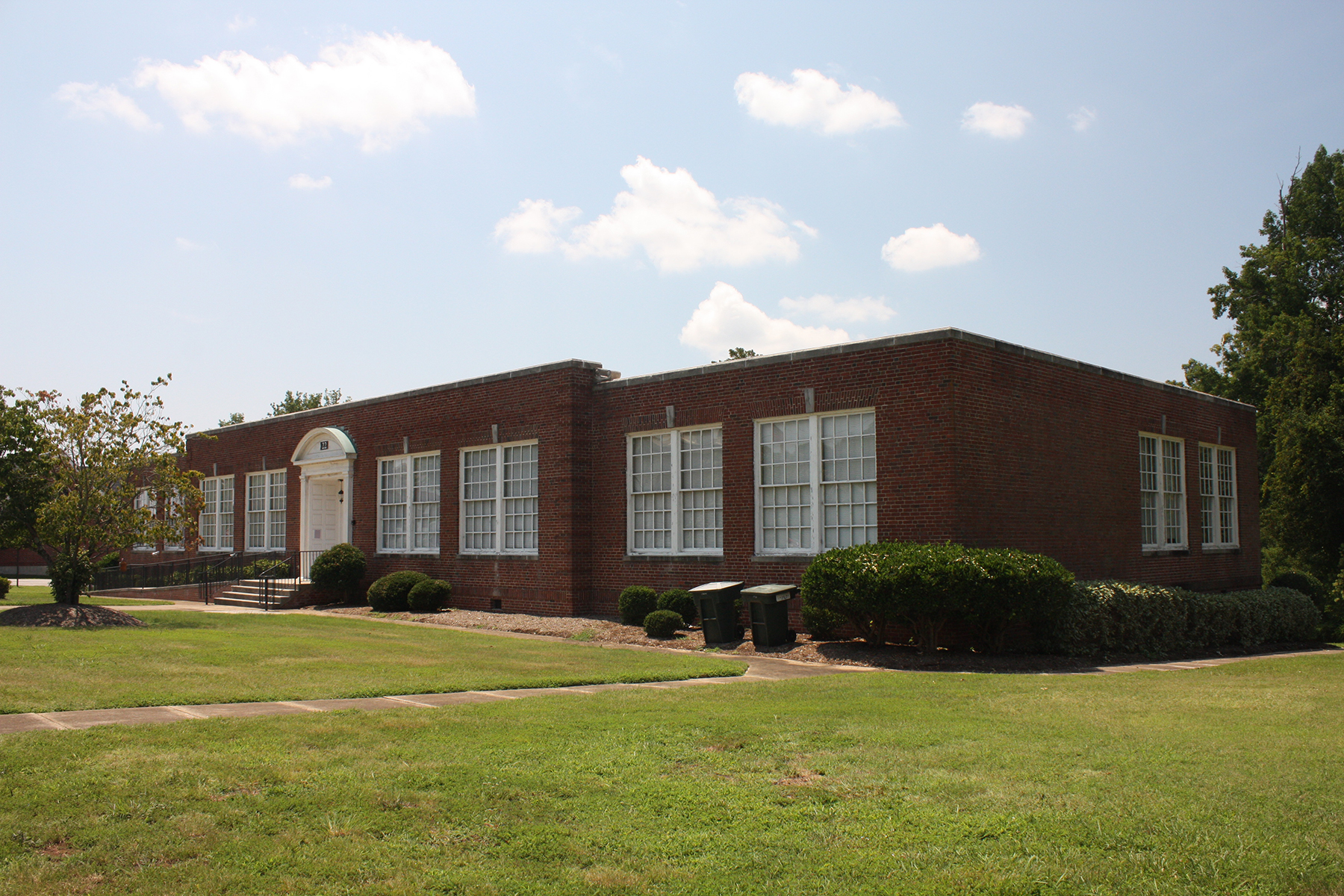
Photo of a 1939 secondary building included in the campus of Schoolfield High School. 2020 photo from the City of Danville.

Above: Photo of a 1936 building included in the campus of Schoolfield High School now a senior apartment complex. 2020 photo from the City of Danville. Below: Schoolfield High School closed in 1954, but this SHS newspaper “The Green Dragon” from 1948 shows a vibrant school community. The Green Dragon was the mascot of Schoolfield High School.


See also:
31 Baltimore Avenue (DHR ID: 108-5065-0081), Architectural Survey Form, Virginia Department of Historic Resources, Richmond, Va.
Smith, Robert S. Mill on the Dan: A History of Dan River Mills, 1882-1950. Duke University Press, 1960, p. 110, 258.
W. Scott Smith et al., “108-5065-0081 Schoolfield School Complex” (Virginia Department of Historic Resources, Richmond Virginia, 2008), https://www.dhr.virginia.gov/historic-registers/108-5065-0081/
Cathy L. McHugh, Mill Family: The Labor System in the Southern Cotton Textile Industry, 1880-1915 (Oxford; New York: Oxford University Press, 1988),pp. 16, 56-57.
Knick, Ethel Posey. Interview by David E. Hoffman, 1984. Averett University Collections, Danville, Va; Virginia Humanities, Charlottesville, Va.
 schoolfieldvillage.com