The Schoolfield Dam & Powerhouse were built under the auspices of the Dan River Power & Manufacturing Company, a corporation founded in 1895 by the same men who had founded Riverside Cotton Mills in 1882. The shared ownership was formalized in the eventual merger of these companies in 1909, creating the Riverside and Dan River Cotton Mills with two divisions, one in downtown Danville known as the Riverside Division and one in Schoolfield known as the Dan River Division. (The company was renamed as Dan River Mills only after World War II and became known as Dan River Inc. only in the 1970s.)
Around 1902 Dan River Power & Manufacturing Company hired the renown Boston-based architectural and engineering firm Lockwood Greene to design a powerhouse and a twenty-five-foot dam that sprawled across the Dan River about a quarter of a mile north of what would become a fifty-acre mill complex at the top of the Schoolfield hill. Because of the advent of electricity, the mill complex could be built away from this dam on a plot north of West Main Street.
Architecturally, the power plant is a gem of a building. A 1994 architectural survey of the structure documented it as it stands today, with roundheaded casement windows lining its common bond brick exterior. The powerhouse has a tall three bay section next to Memorial Drive and a lower fifteen-bay section that extends across the Dan. The fifteen-bay section of the powerhouse is held by concrete barrel vaults that allow the Dan River to flow through. The dam and powerhouse still today as a showcase of the dreams and profitable aspirations that were born with new technology at the turn of the century.
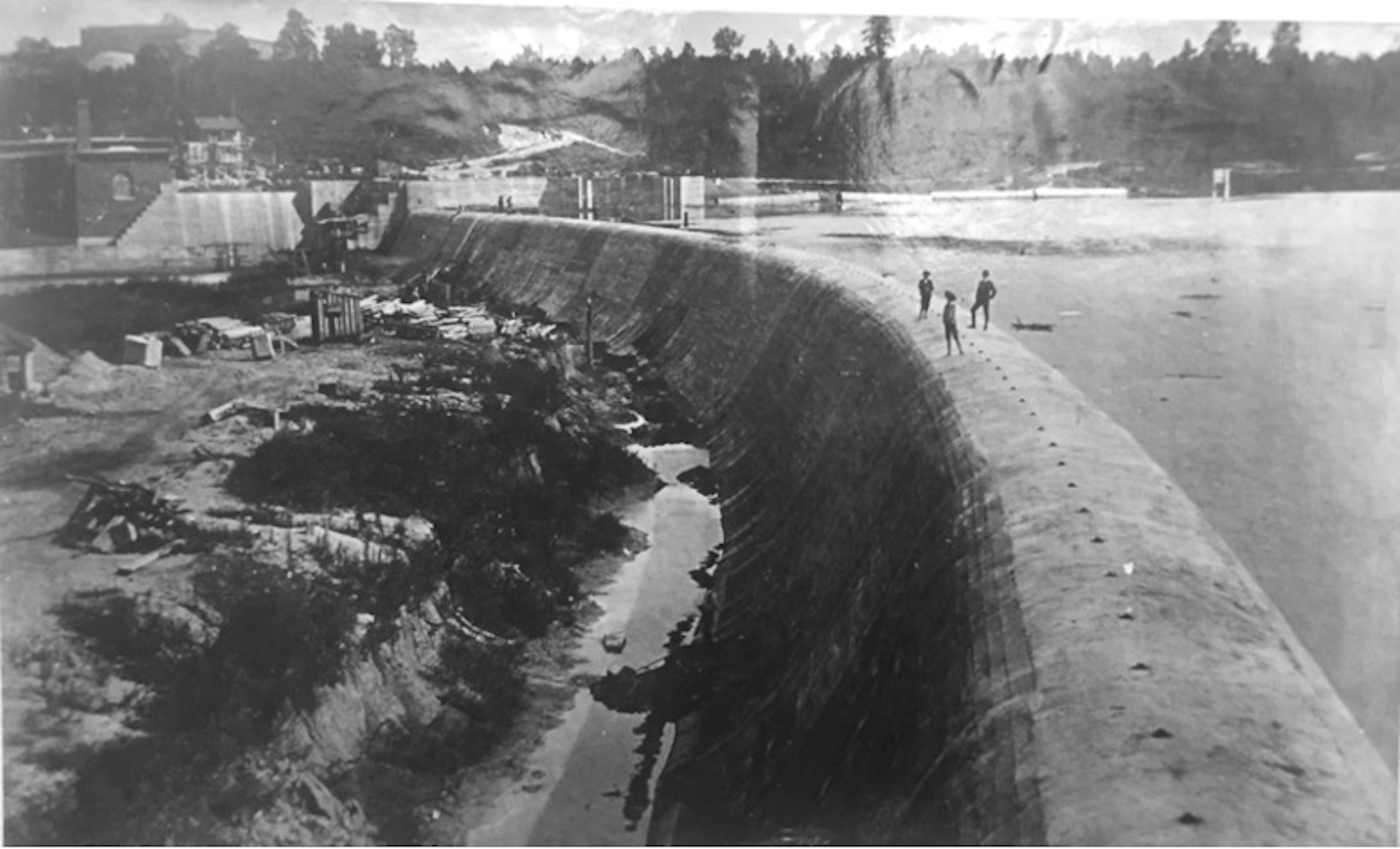
Lockwood Greene designed the Schoolfield dam along the Dan River, shown under construction here circa 1902, with a view towards Schoolfield. Courtesy of Lockwood Greene Collection at the Smithsonian.
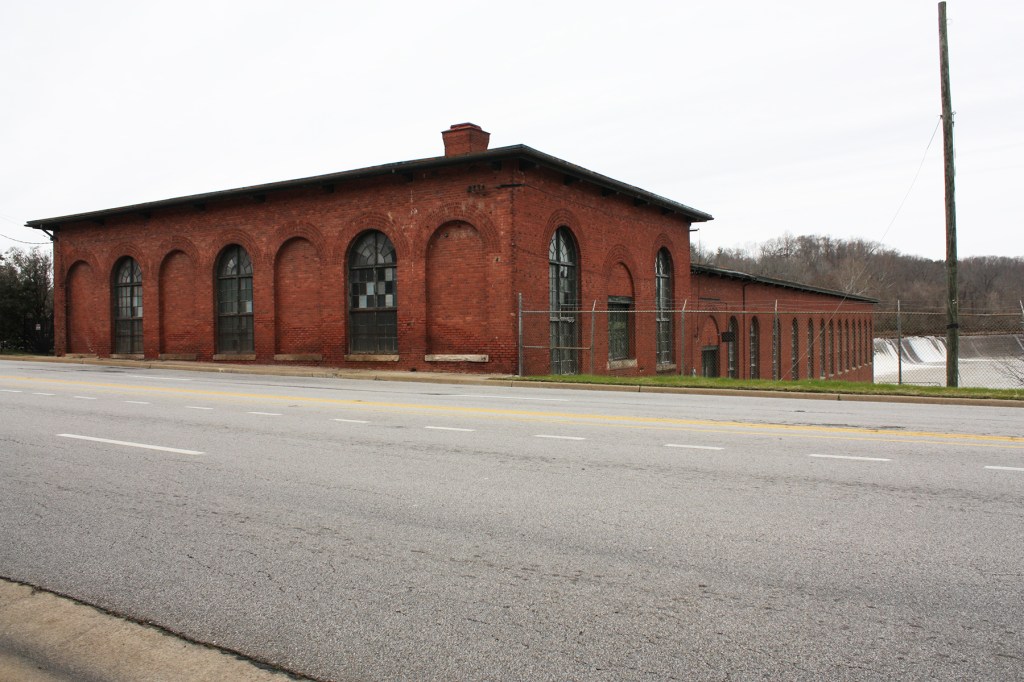
This 2020 photo shows the powerhouse and dam as they stand today, viewing north. Photo on file with the City of Danville.
See also:
Smith, Robert S. Mill on the Dan: A History of Dan River Mills, 1882-1950. Duke University Press, 1960, p 72.
 schoolfieldvillage.com