On this spot once stood Hylton Hall, a women’s dormitory built by Dan River in 1919. The building was named for Hattie Hylton, the superintendent of the mill’s welfare department, and was the only building built by Dan River Mills that was named in someone’s honor. Hylton was widely thought to have devoted “best energies of her life” to Schoolfield in her time leading the welfare program in the village from 1907 until 1921 and she herself took part in the design and layout of the women’s dormitory.
Sharing the same author as the Welfare Building and Schoolfield YMCA—the Virginia architect J. Bryant Heard, Hylton Hall similarly boasted a brick exterior Classical Revival Style for which Heard was known. Despite some similarities in material and design, Hylton Hall was a much grander building than the village’s other welfare buildings. Six stories in height with classical columns and a proud full-height porticoed entrance, Hylton Hall stood apart in design and placement from the other welfare buildings, which were oriented along West Main Street in closer proximity to the industrial and commercial life of the village. The boarding house’s placement in the village was at once a cultivator of womanhood and a haven for Dan River’s much-needed white female labor. Dan River was especially keen to house single female workers during this time, when a shortage of men due to World War I compelled more women into industrial roles. Eventually female millhands made up nearly forty-percent of the workforce at the mills in the early 20th century.
During the design and construction of Hylton Hall, Dan River President Harry Fitzgerald “quite deferred” to Hattie Hylton’s judgement and advice about the building. However, the final floorplan and use of the building was constructed to address distinctive challenges that a workforce of single women posed within the period’s social mores. Built in an E-shape along with its front elevation facing north, Hylton Hall was a wealth of leisure and living space created especially for women. Its north-south orientation offered views of the mills to the north and family residences to the south, showcasing future careers— of wife and millhand— for the single women residents. In addition to the residential dormitories, Hylton Hall featured a large dining room, an auditorium, and a large parlor and reception room with smaller, individual parlors where the single women could receive suitors (with a chaperone, of course), nearby classrooms for instruction in millinery and dressmaking, an infirmary, a gym, a swimming pool, and a community greenhouse as well as guest rooms for visiting family. An additional amenity for the young women was an underground walkway that connected the boarding house directly to the mill site just north of the railroad. Situated amidst industry and homes, executives demonstrated Hylton Hall’s purpose: “to develop [residents] into good women of high ideals…who will, in the very nature of things, go forth in time, with enlarged vision and high purpose to create homes of their own” in the village.
Hylton Hall offered employment and housing, albeit segregated, to Black workers. The Black servants’ quarters, as noted in a clipping of a promotional local article, were “widely separated from the other residential quarters,” such as the upper floors where white residents lived. Serving as cooks, maids, and laundresses, Black women and at least one Black “man-servant” also had rooms in Hylton Hall. As was common in the Jim Crow south, separation of Black servants from white residents via different walkways, corridors, and housing were employed by white people as strategies for maintaining racial segregation. By 1925, with fewer and fewer single women working at the mill, Hylton Hall began to rent out rooms to married couples to keep afloat fiscally. After remaining mostly empty as a residential building, the dormitory was finally converted to offices in 1948 and remained so until Dan River’s closing in 2006. Unfortunately, this landmark of the village was demolished in 2012 after arson devastated the vacant six-story building.
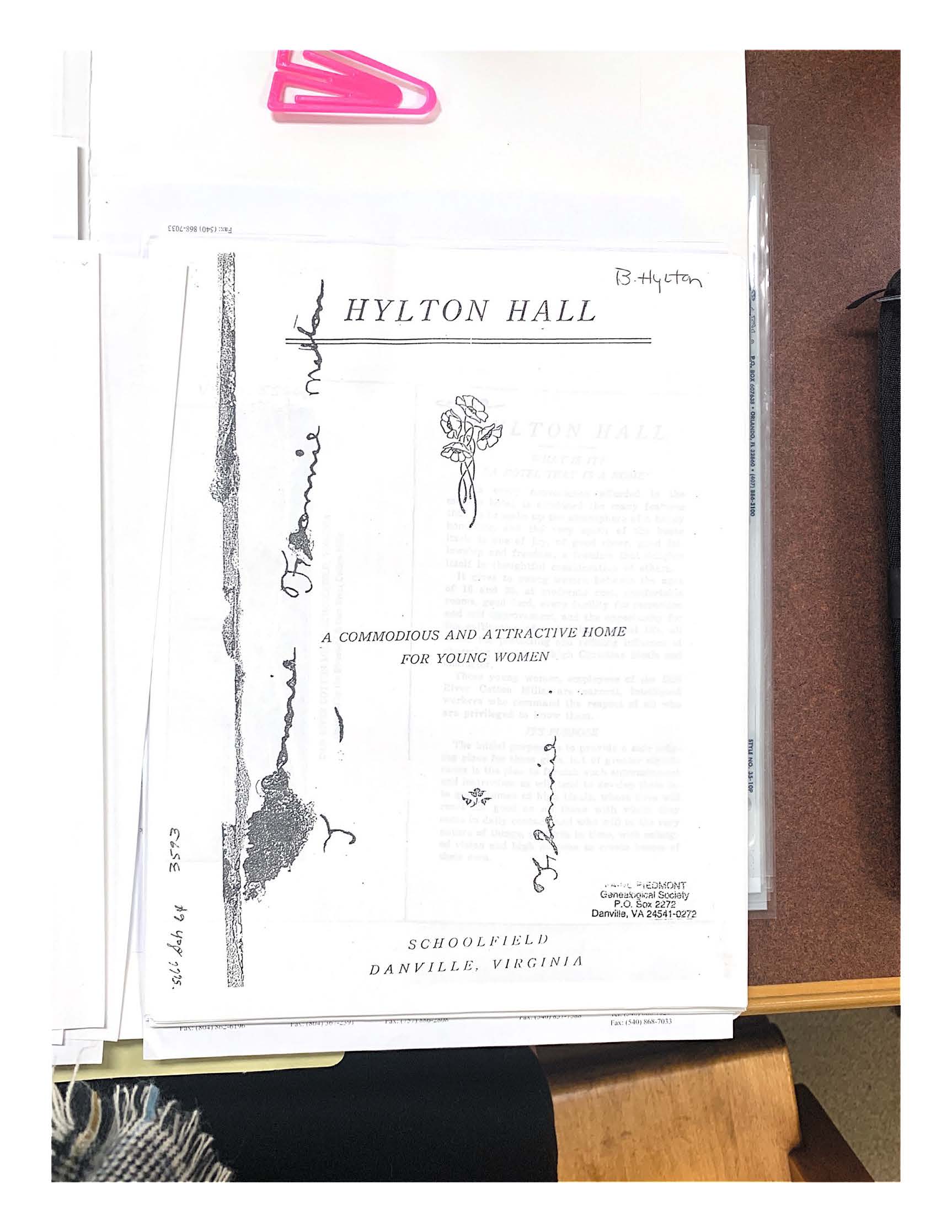
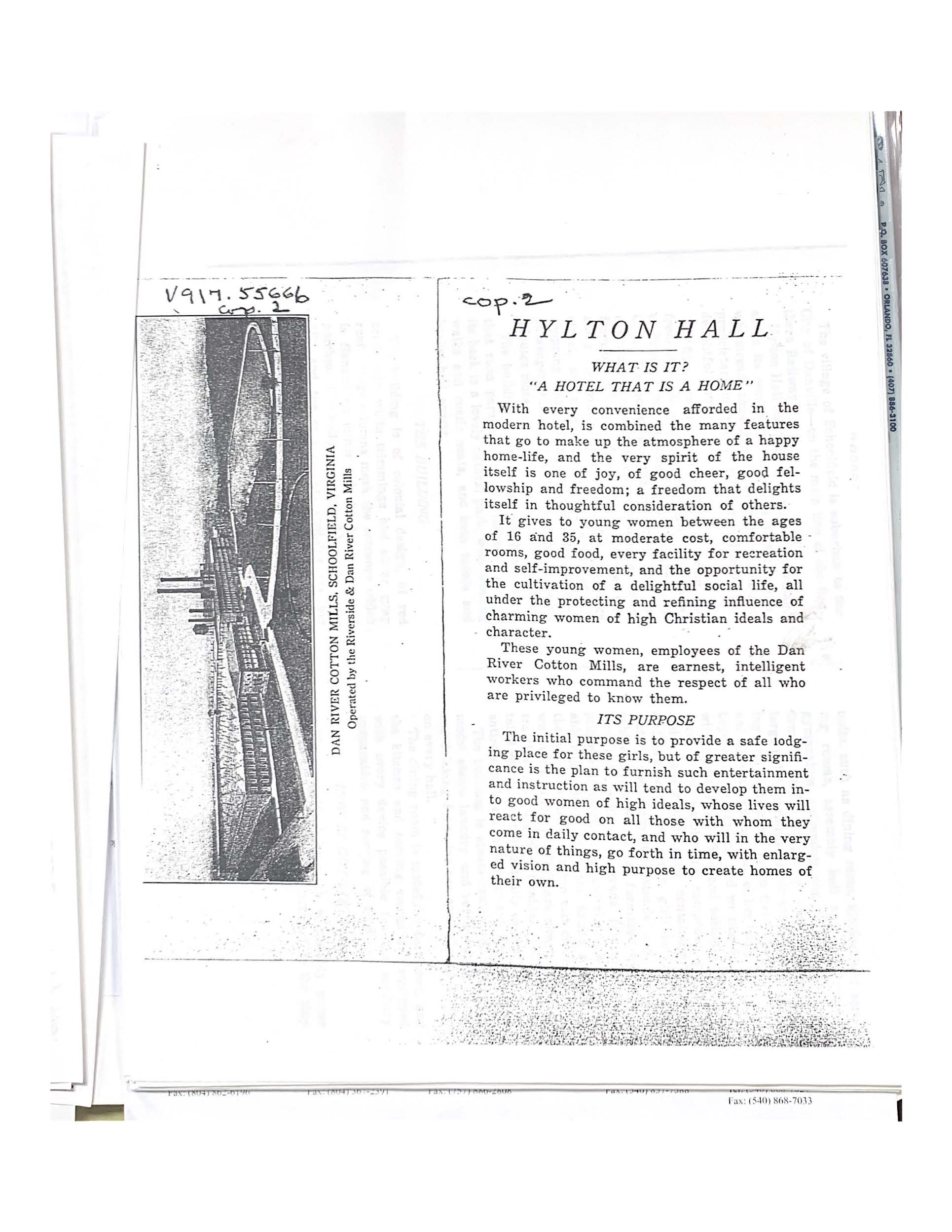
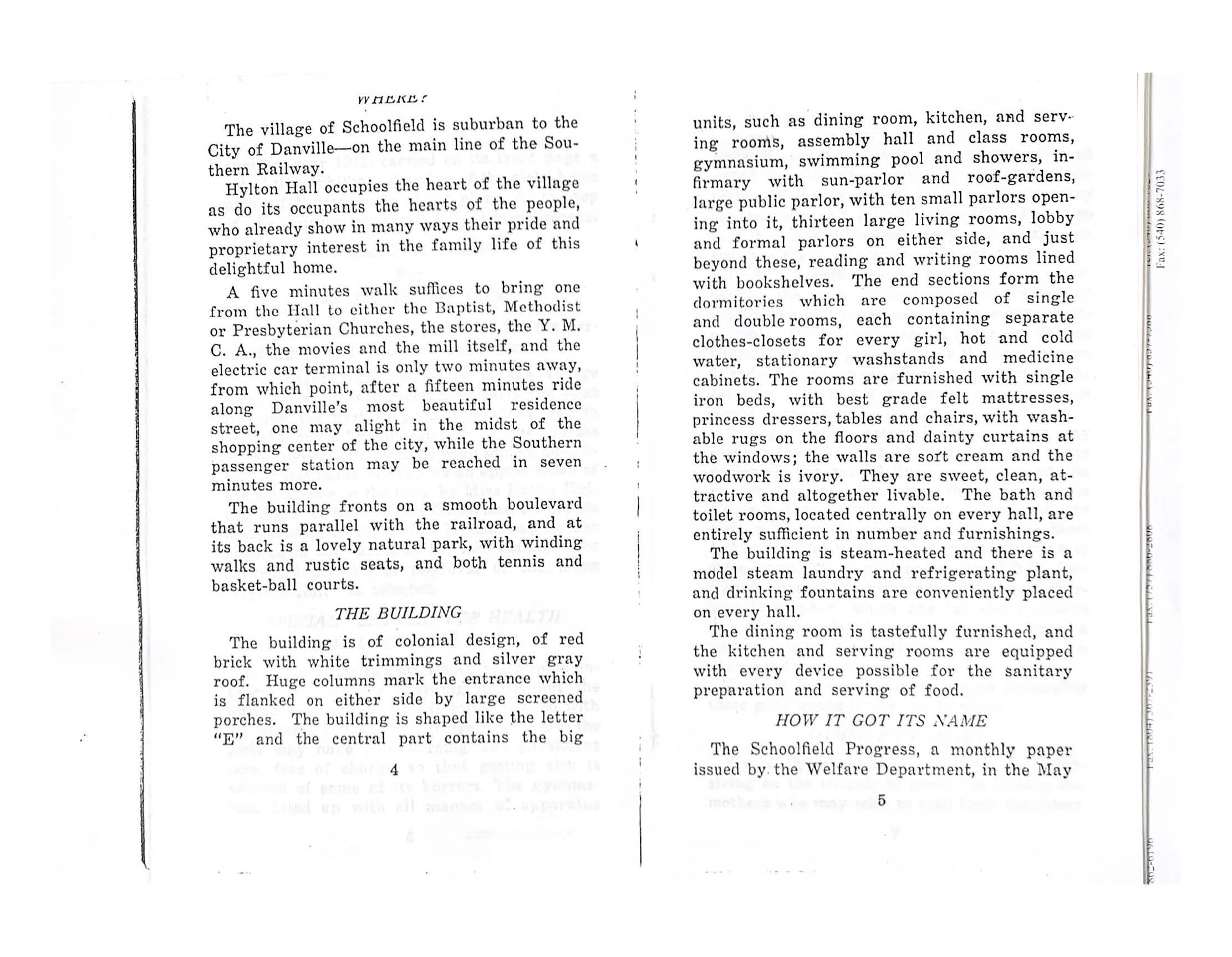
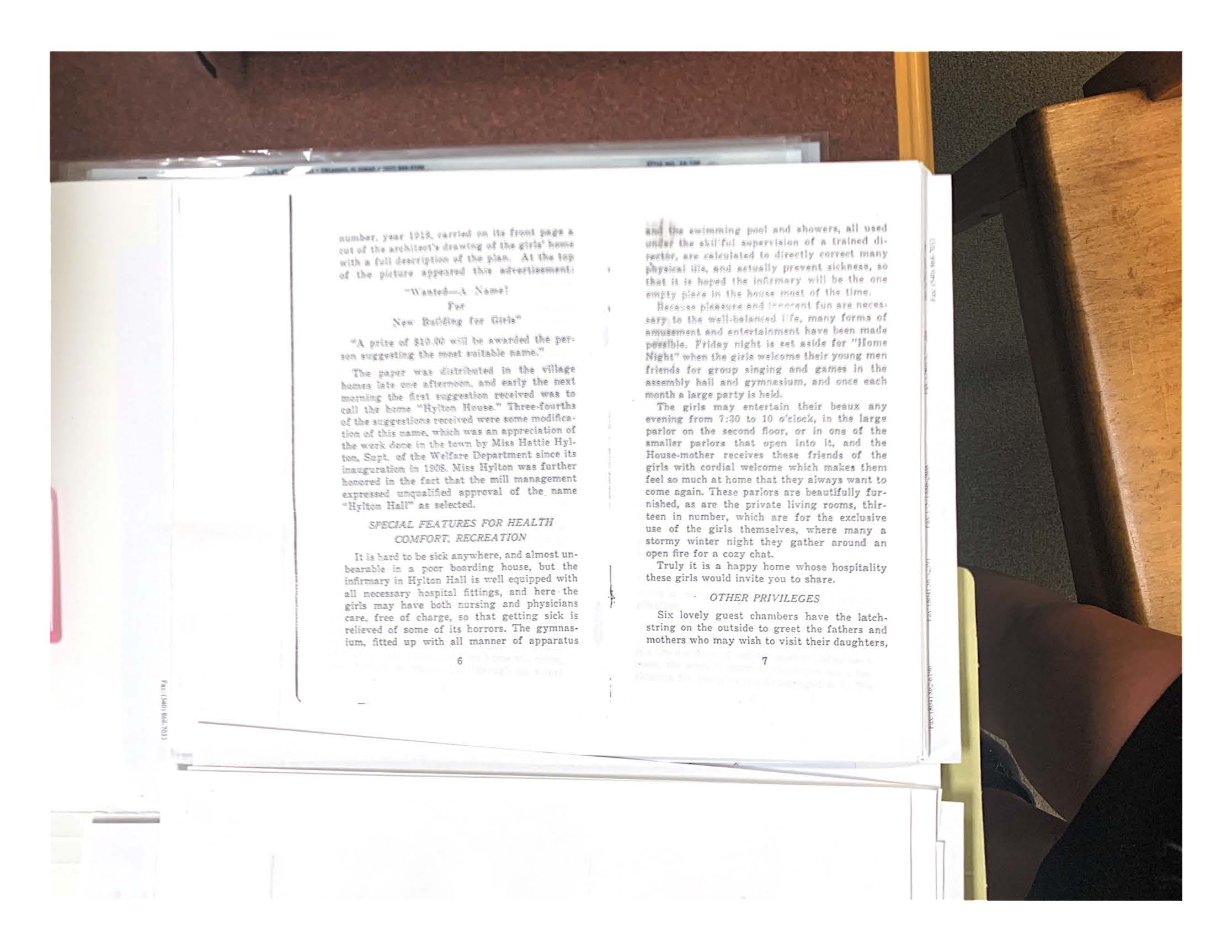
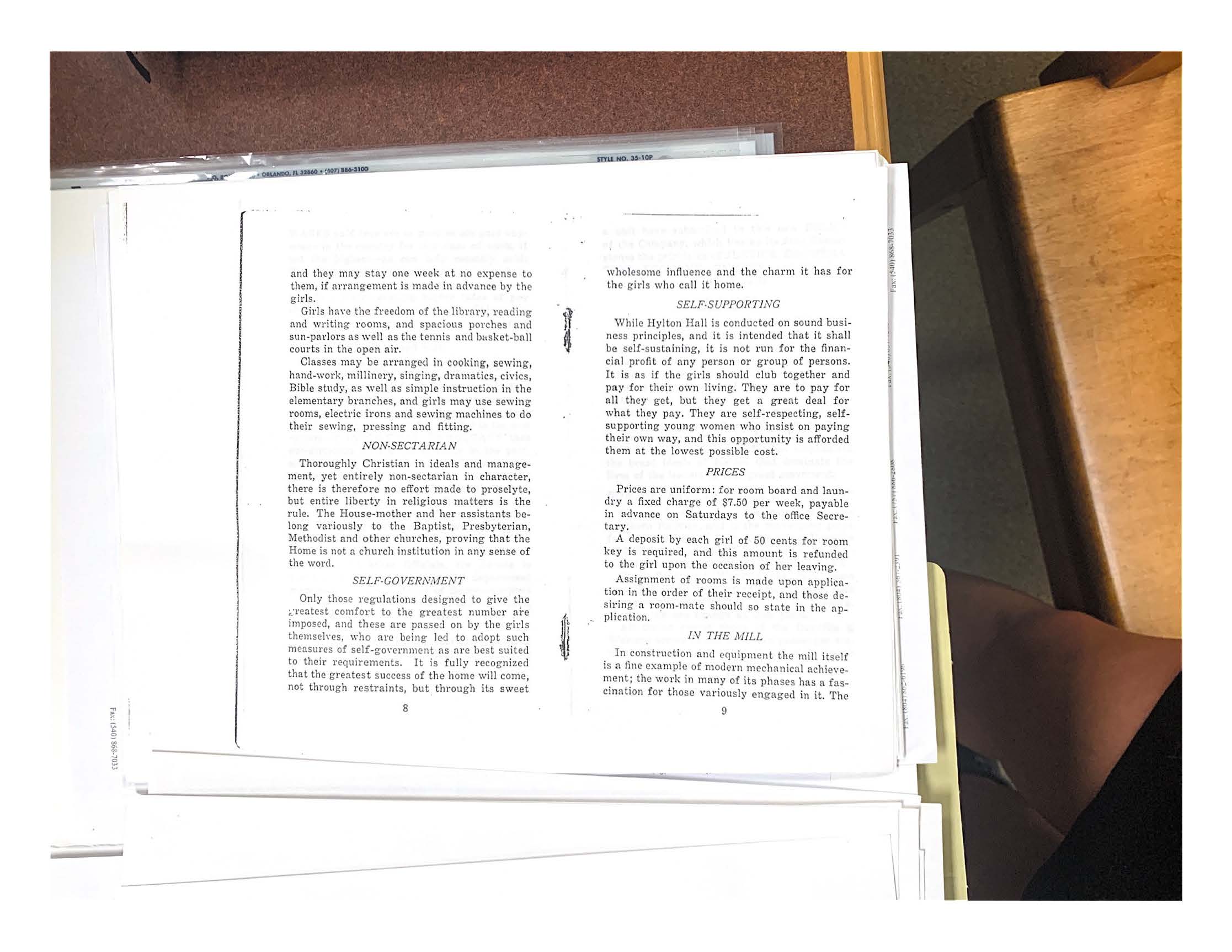
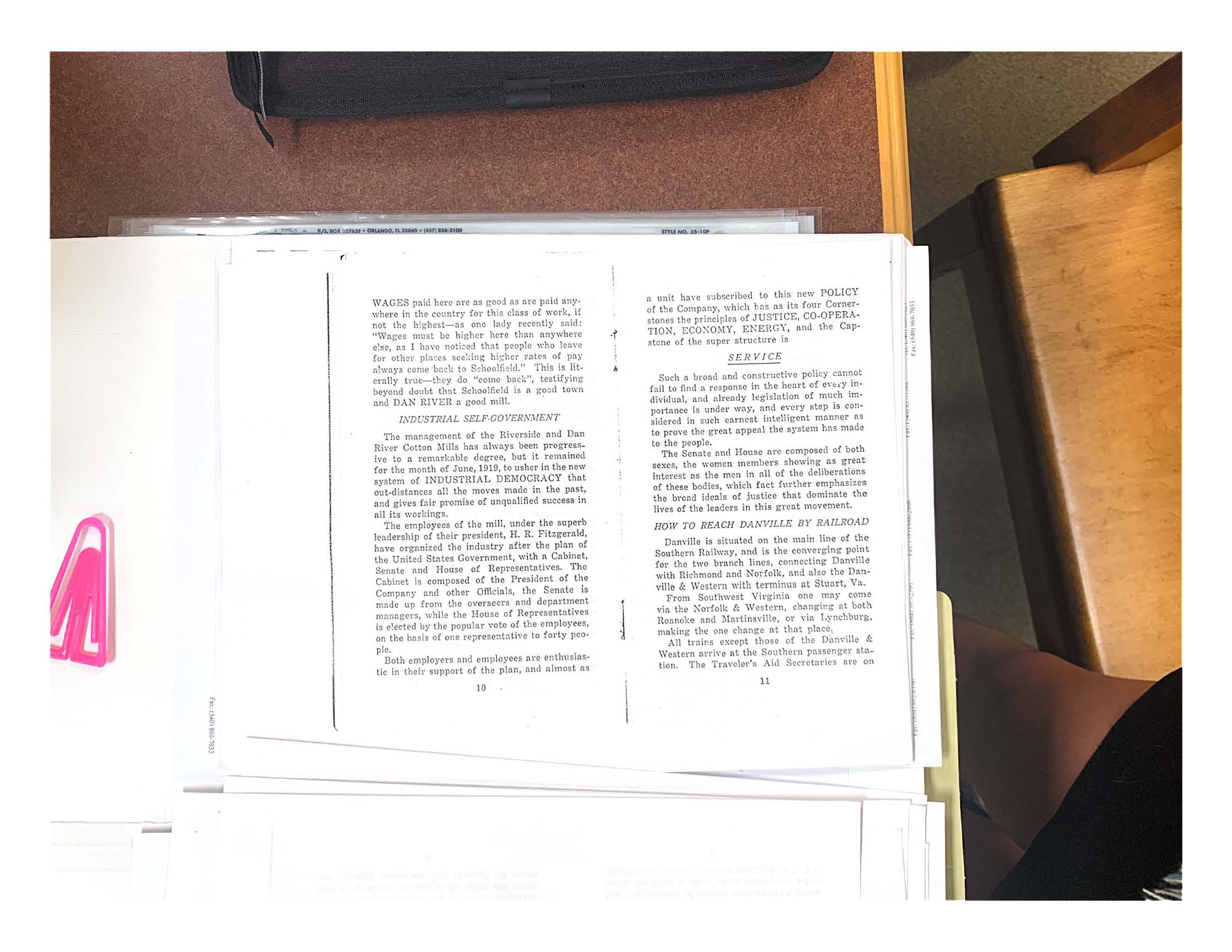
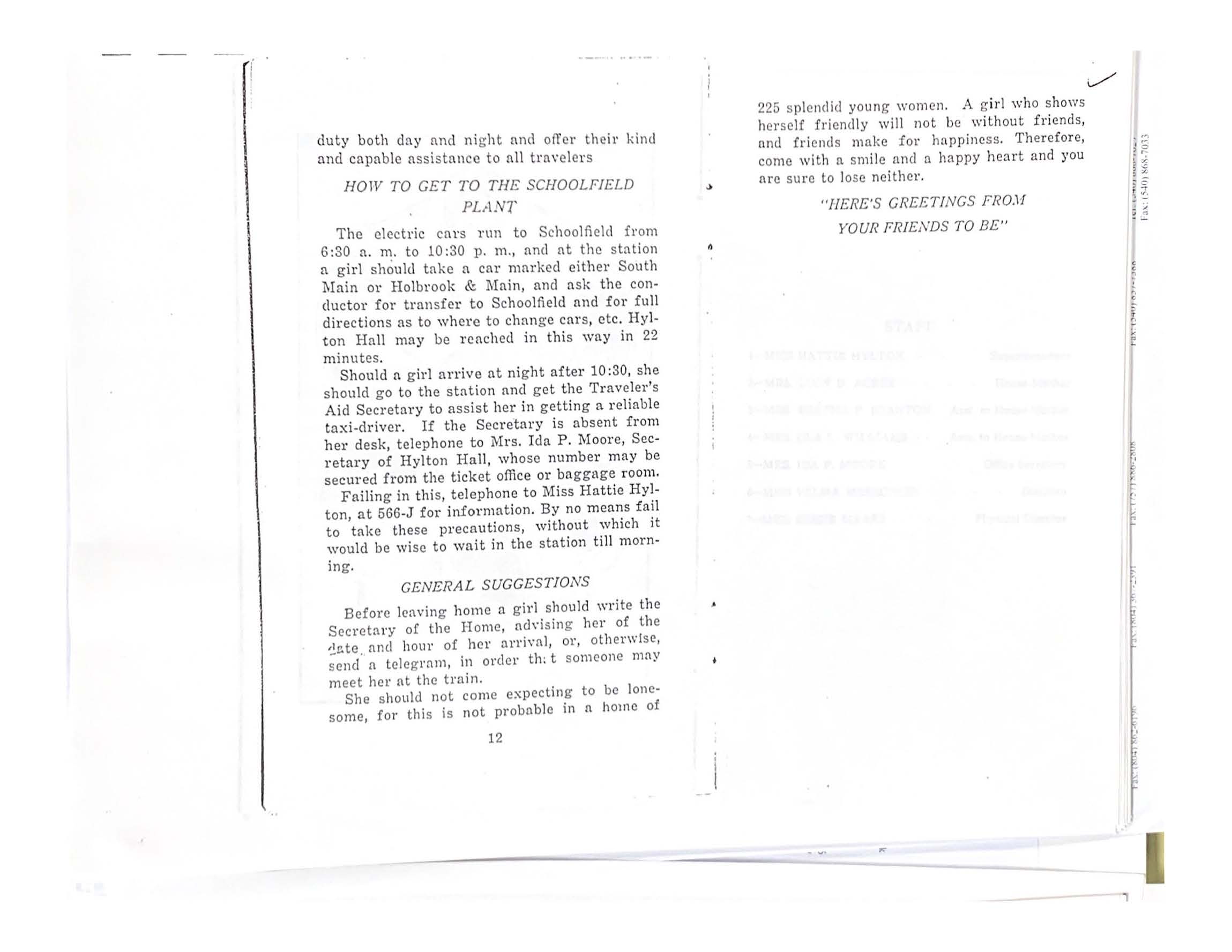
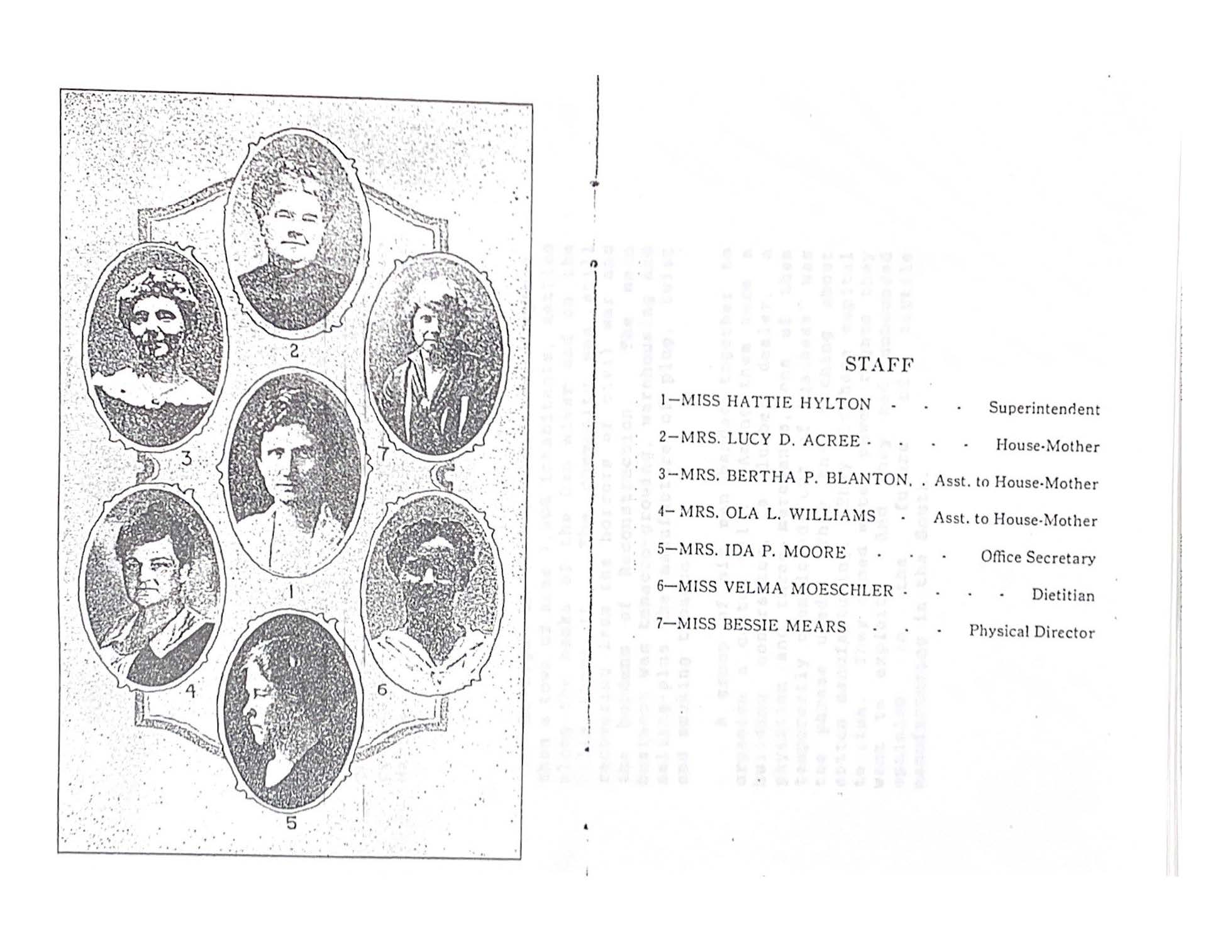
This early Hylton Hall pamphlet outlines amenities and activities for single women at Dan River. Courtesy of Virginia Department of Historic Resources, Hylton Hall archival file.
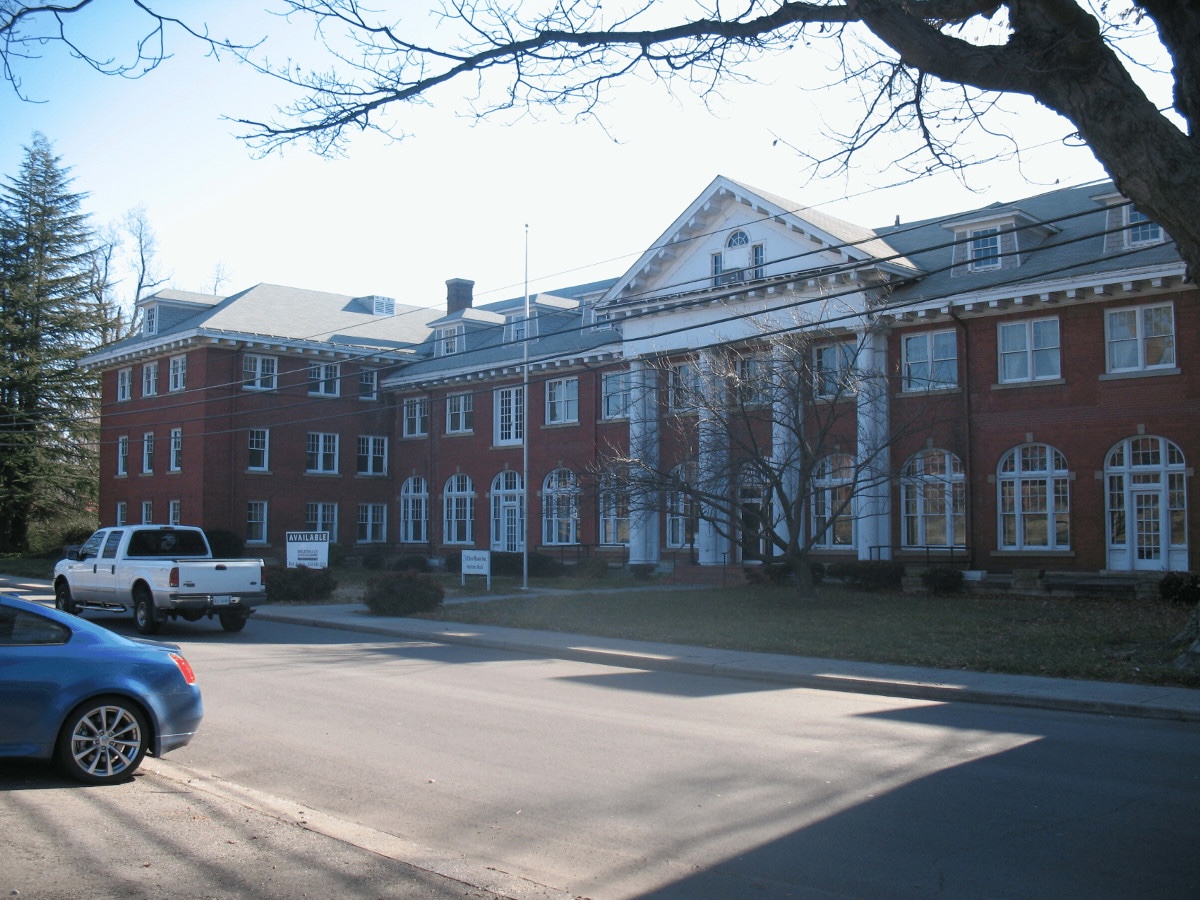
A circa 2006 photo shows Hylton Hall in its last stage of life. Photo courtesy of the Virginia Department of Historic Resources.
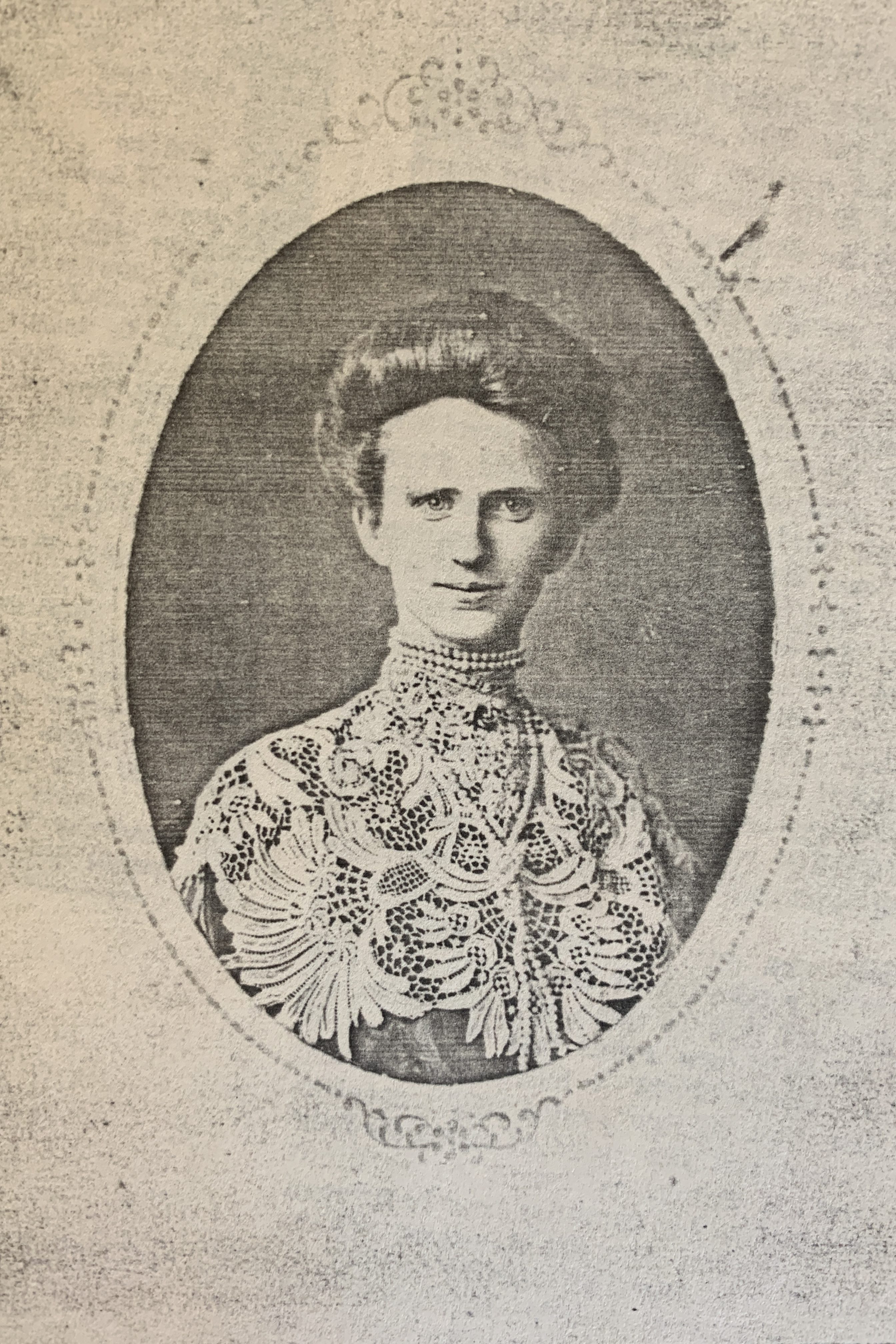
This 1900s portrait shows a young Hattie Hylton, Hylton Hall’s namesake and the director of Dan River’s extensive welfare program. Courtesy of UNC-Chapel Hill Wilson Library’s Southern Historical Collection Dan River Inc. Papers.
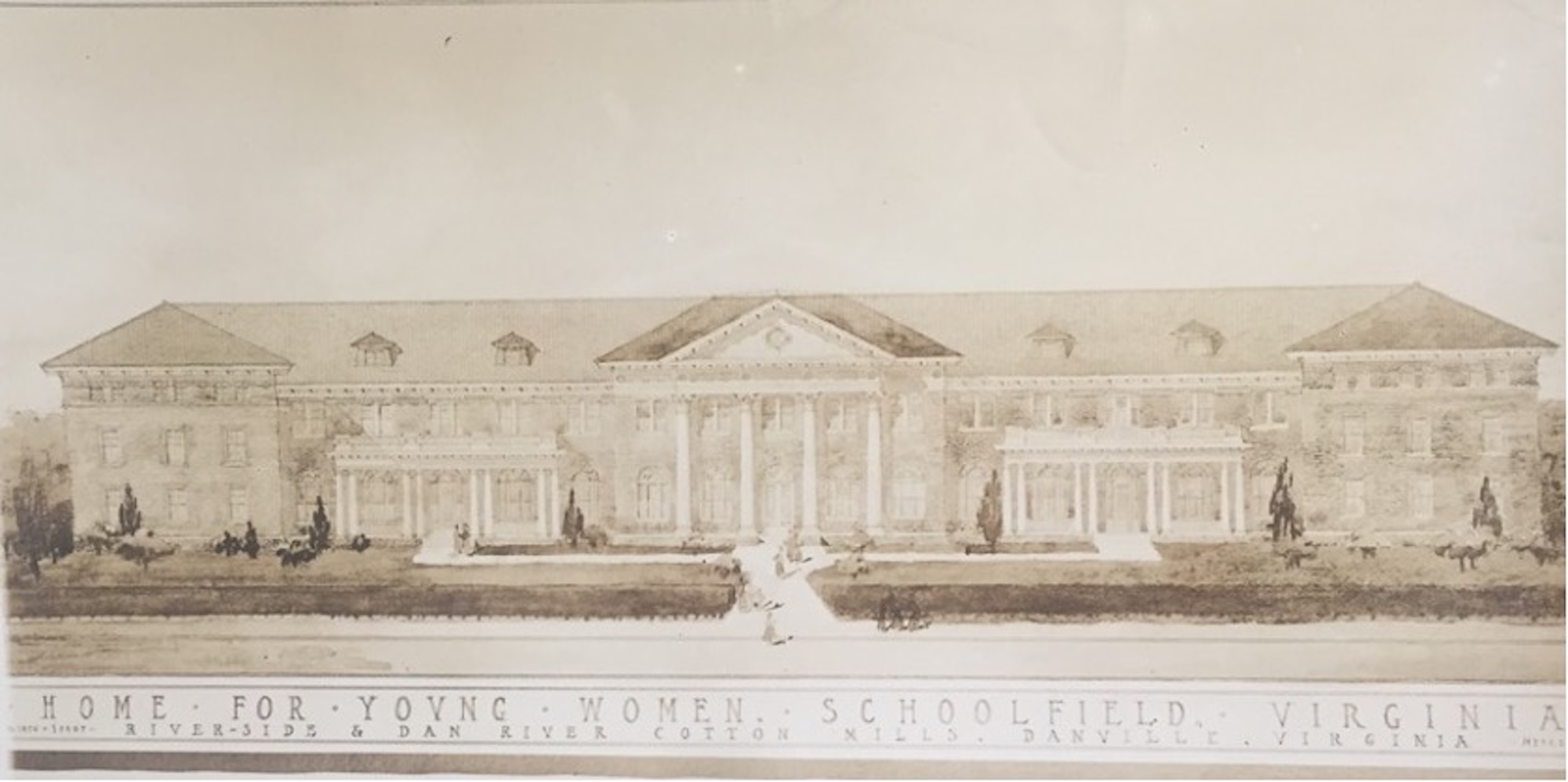
An early advertisement for Dan River’s new boarding house for women. Courtesy of UNC-Chapel Hill Wilson Library’s Southern Historical Collection Dan River Inc. Papers.

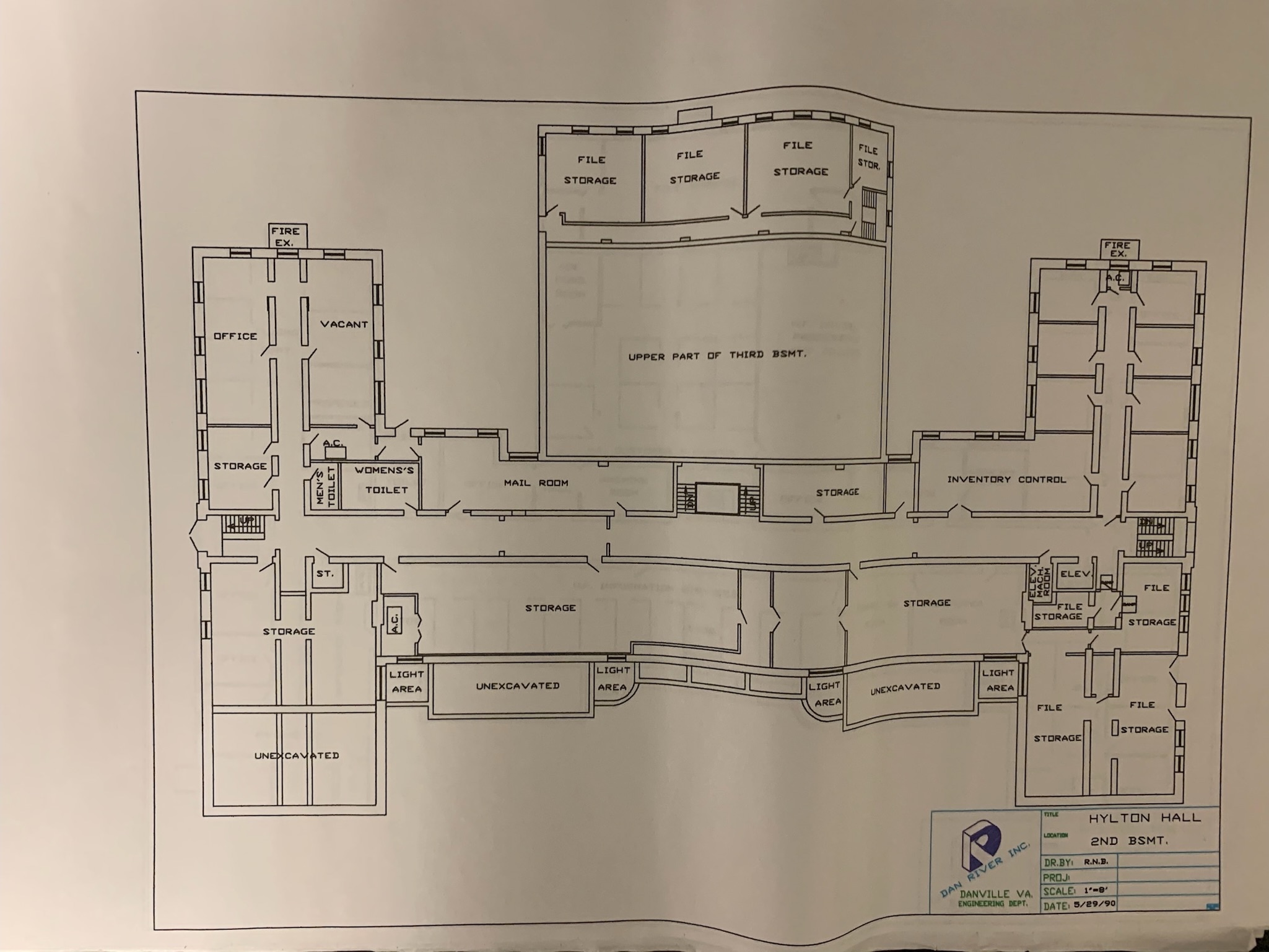
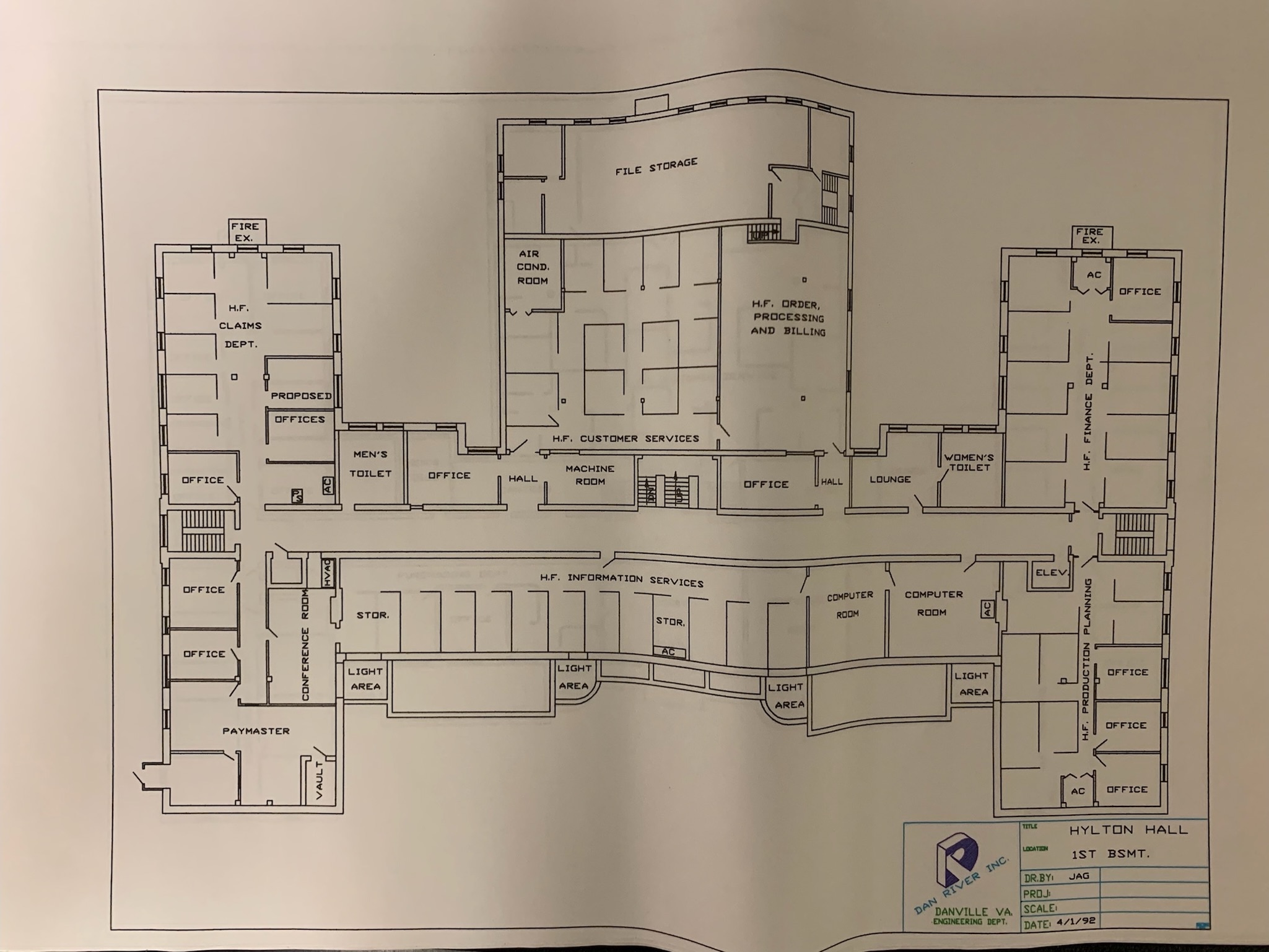
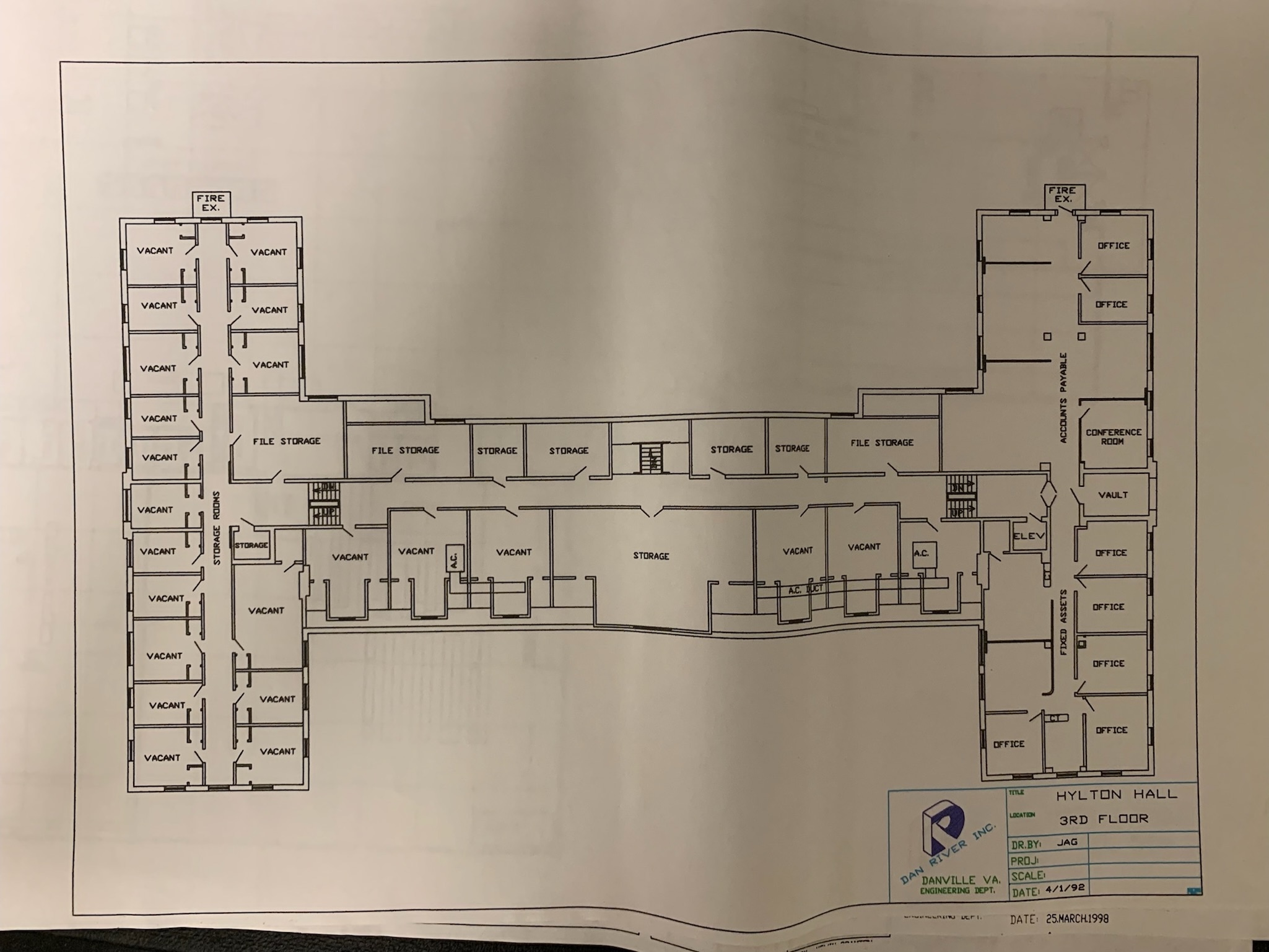
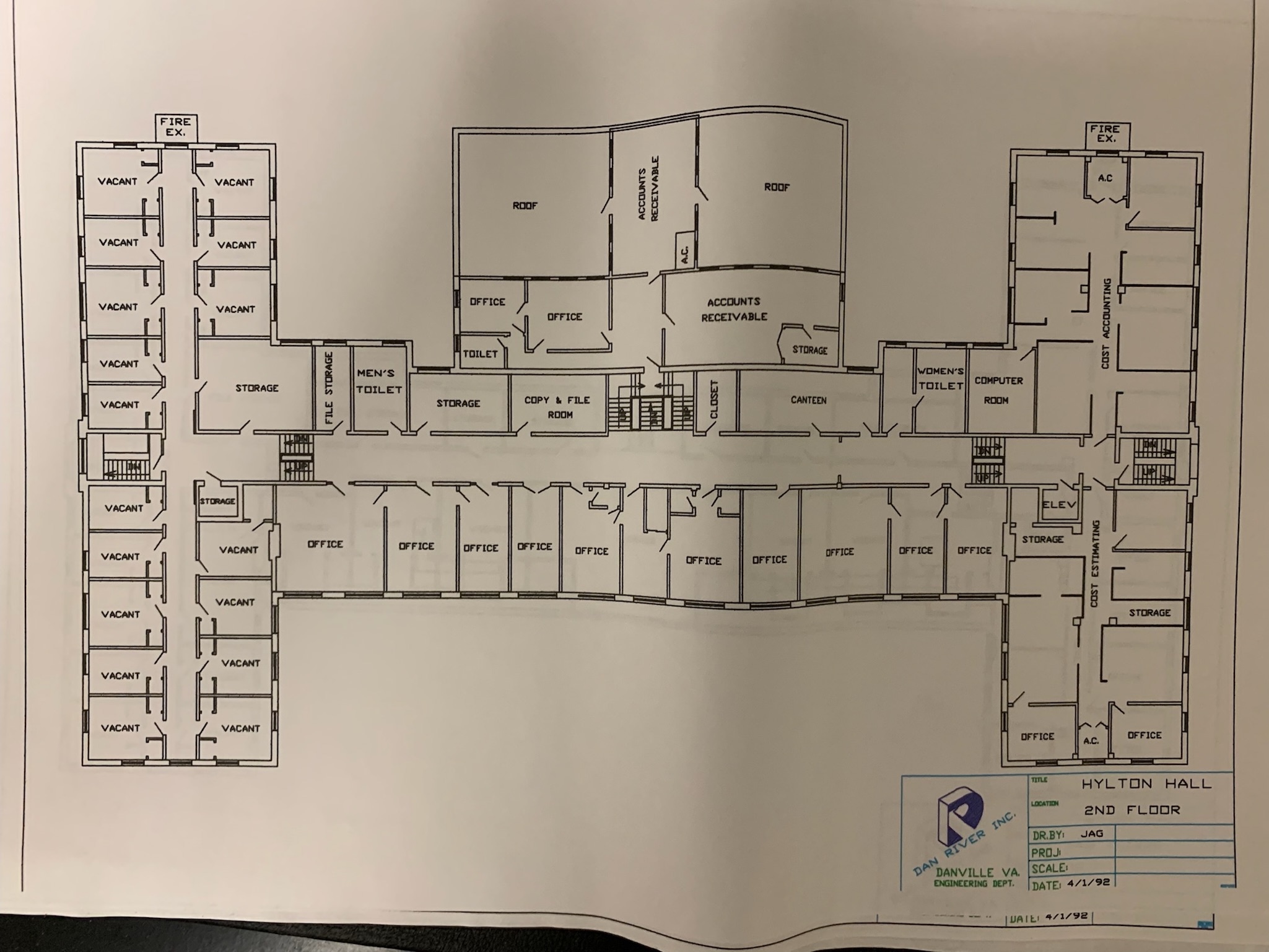
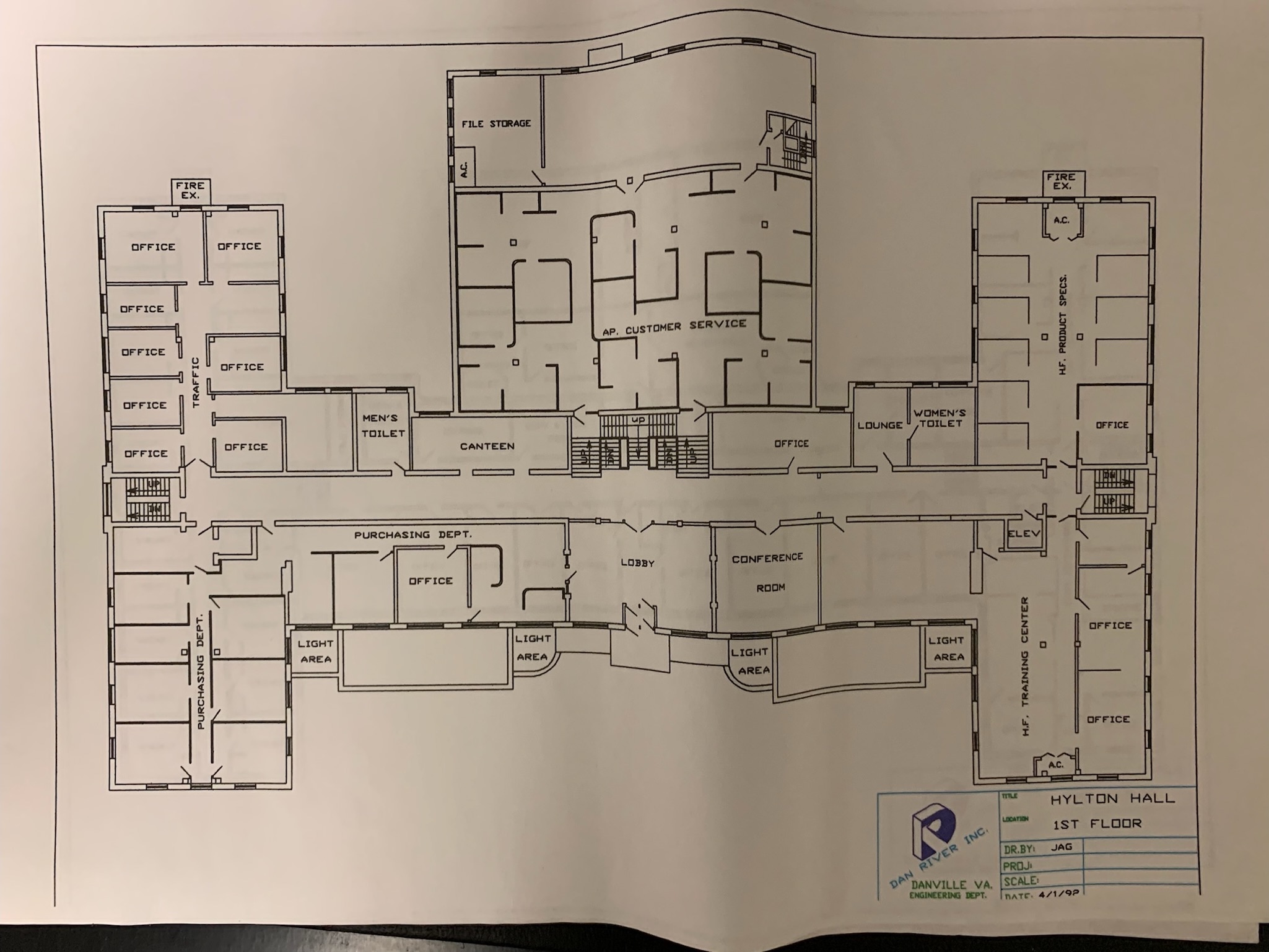
Above: These 1992 Plans show the layout of Hylton Hall when it was used for Dan River Offices. Courtesy of Odell Hudson.
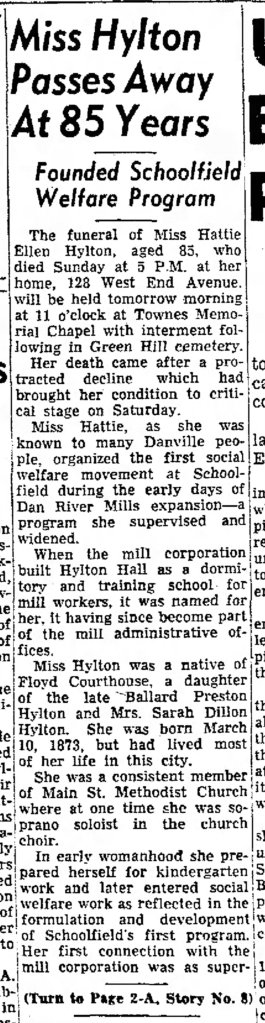
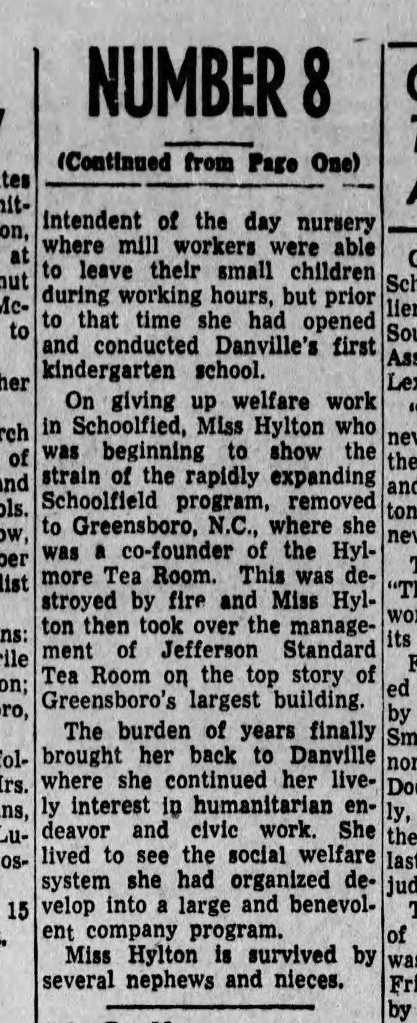
Below: Hattie Hylton was much beloved in the community, as Hylton’s obituary from an April 28, 1958 obituary in The Bee indicates.
See also:
Sarah McPhail and Marcus Pollard, “108-5065-0082 Hylton Hall” (Department of Historic Resources, Richmond Virginia, April 2009), https://www.dhr.virginia.gov/historic-registers/108-5065-0082/.
Clark, David, ed. “Health and Happiness Number.” Southern Textile Bulletin XVIII, no. 17 (December 25, 1919). https://archive.org/details/southerntextileb1919unse.
Clark, David, ed. “Health and Happiness Number.” Southern Textile Bulletin XXIV, no. 17 (June 21, 1923). https://archive.org/details/southerntextileb1923unse.
O’Conner, Adrian. River City: Stories of Danville. Danville, Va: Delmar, 1994.
Hall, Jacquelyn Dowd, James Leloudis, Robert Korstad, Mary Murphy, Lu Ann Jones, and Christopher Daley. Like a Family: The Making of a Southern Cotton Mill World. 2000 ed. The Fred W. Morrison Series in Southern Studies. Chapel Hill: University of North Carolina Press, 1987, p. 154.
Dan River Mills, Inc., Records #5793, Southern Historical Collection, The Wilson Library, University of North Carolina at Chapel Hill.
Dan River Cotton Mills, “Hylton Hall: A Commodious and Attractive Home for Young Women,” 1920, Hylton Hall, Danville City 108-5065-0082, Virginia Department of Historic Resources, Richmond.
 schoolfieldvillage.com